ع
ع





In an interview with Gulf Times published Friday, Michael Trick, the dean of Carnegie Mellon University in Qatar, outlined how the country’s educational investments have positioned human capital as its leading business asset. Trick told the newspaper that Qatar’s primary competitive advantage lies in its world-class educational ecosystem spanning Education City, Qatar University and other institutions, paired with political and economic stability. He stressed that the leadership’s consistent development vision over three decades builds corporate confidence for regional headquarters decisions.
The dean viewed regional diversification efforts among Gulf states as complementary rather than competitive, with the true rivalry lying in the global marketplace. According to the Government Communications Office, this strategy supports the human development pillar of Qatar National Vision 2030, which seeks to create an educated, healthy and capable population. A BTI Transformation Index country report places Qatar 40th out of 193 nations on the Human Development Index, driven by high living standards and women’s education levels.
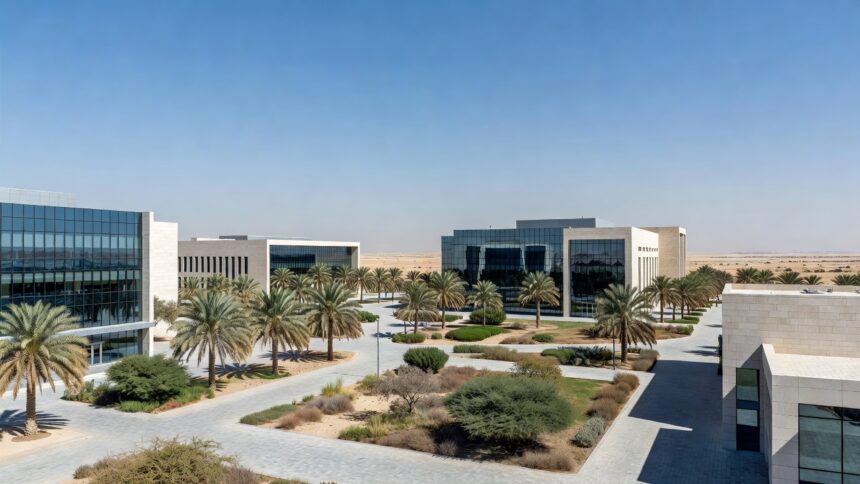
Trick described the branch campuses in Education City as enduring elements of Qatar’s architecture for a knowledge economy, training students to become global collaborators vital for the nation’s international role. With a small domestic population, the dean explained that sustainable talent development through higher education has replaced earlier models of temporary foreign expertise secured via premium payments. Gulf Times has reported that nearly 95 per cent of CMU-Q’s recent graduates elect to build their careers in Qatar.
The university maintains strong private sector ties, with Trick noting outstanding engagement from organisations including QNB, the Qatar Investment Authority and Snoonu that provide project opportunities and hire alumni. He observed that regional companies are increasingly partnering with universities for research and development, marking a positive shift from past practices. This collaboration enhances the practical skills of graduates and contributes to innovation across key sectors.
Qatar’s education market is projected to grow from $7.5 billion in 2025 to $13.22 billion by 2034 at a 6.5 per cent compound annual rate, according to a Report Cube analysis, reflecting rising demand for quality human capital formation. Trick’s assessment aligns with international benchmarks that assign the country a Human Capital Index of 0.67, indicating solid but improvable foundations for productivity. Such metrics underscore the ongoing emphasis on workforce nationalisation and skill development under national planning frameworks.
The dean’s comments reinforce how targeted educational policies have enabled Qatar to attract and retain talent essential for its ambitions as a diversified regional hub in finance, logistics and diplomacy. By fostering an environment of stability and opportunity, the country continues to build on its human capital strengths to compete effectively on the world stage. Additional research partnerships between academia and industry are anticipated to accelerate this progress in the coming years.