ع
ع

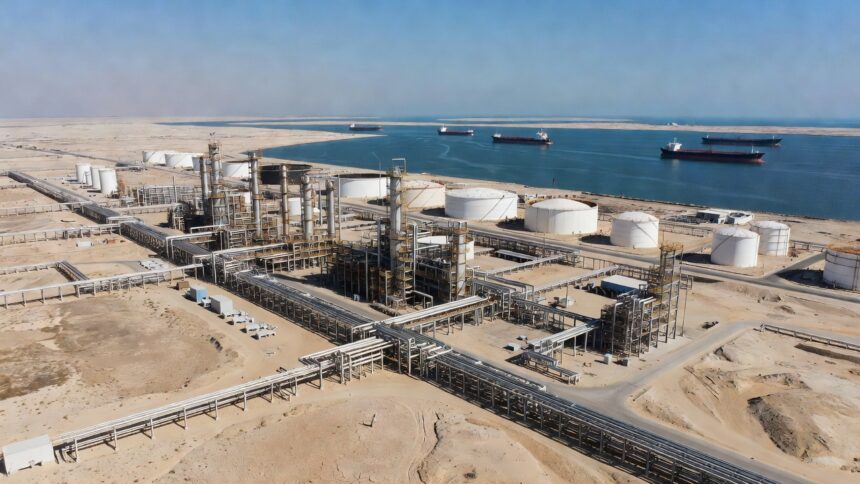


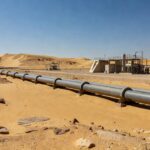
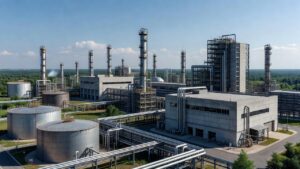
Saudi Finance Minister Mohammed Al Jadaan told an International Monetary Fund briefing that boosting energy production across the Gulf would take time because of infrastructure damage inflicted during Iranian attacks. The minister who chairs the IMF’s steering committee noted that certain countries could restore output more quickly while others faced longer repairs depending on the scale of destruction. Damaged facilities included the UAE’s Shah gas plant Saudi Arabia’s Ras Tanura refinery Kuwait’s Mina Al Ahmadi refinery Qatar’s Raf Laffan Industrial Complex and Saudi Arabia’s East-West Pipeline according to The National. The pipeline has since returned to full capacity the Saudi Ministry of Energy reported.
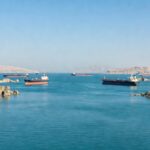
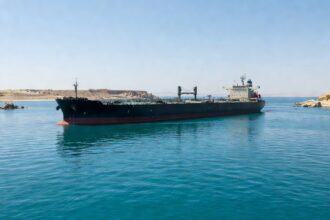
Oil prices fell sharply after the announcement of the Strait of Hormuz reopening with Brent crude and US crude both dropping more than 10 per cent. Al Jadaan pointed to a serious disconnect between paper market trading and physical supply realities during the briefing. The effective closure of the strait had disrupted daily transport equivalent to about 20 per cent of global oil consumption with knock-on effects for natural gas and fertiliser supply chains a Reuters analysis from March 2026 found. Industry officials indicated that storage facilities filled rapidly forcing production cuts across several Gulf states.
Al Jadaan stated that seeing tankers moving through the strait alongside reasonable insurance costs and tanker owners willing to transit the waterway would signal a shift in the recovery scenario. The comments came as a 10-day ceasefire between Israel and Lebanon took effect though the US maintained its naval blockade and Iran questioned the arrangement’s validity. A subsequent Reuters report in June 2026 indicated that full restoration of pre-conflict production levels could require weeks months or even years depending on the facility.
The IMF assessed that the Iran conflict posed a serious threat to the global economy despite rerouting efforts. Its projections pointed to a moderate downgrade in global growth under the best-case scenario while a prolonged conflict risked tipping the world toward recession according to an IMF blog post from April 2026. Several economies including Bahrain Kuwait Iran Iraq and Qatar faced outright contractions with Oman Saudi Arabia and the UAE also receiving outlook downgrades. IMF managing director Kristalina Georgieva noted that recent measures reduced but did not eliminate global anxiety.
Georgieva emphasised the need for durable peace to ensure sustainable free passage through key waterways. The IMF World Bank and other multilateral institutions prepared a response package with the fund anticipating demand for financial support between $20 billion and $50 billion across at least a dozen countries many in Africa. World Bank president Ajay Banga indicated the institution could mobilise up to $100 billion in funding with $25 billion in rapid financing already under preparation Reuters reported. Georgieva described the World Bank’s grant capabilities as particularly valuable for affected economies.
Goldman Sachs projected in late April 2026 that Gulf oil output could recover about 70 per cent of lost production within three months and 88 per cent within six months assuming a safe sustained reopening of the Strait of Hormuz. The International Energy Agency’s June 2026 Oil Market Report stressed that fully resuming flows through the strait remained the critical factor for easing pressure on energy supplies and the global economy. QatarEnergy’s chief executive separately told Reuters that Iranian attacks had sidelined 17 per cent of the country’s LNG capacity for three to five years resulting in substantial revenue losses.
By late June 2026 Middle East producers including those in Saudi Arabia the UAE and Qatar had resumed some oil and LNG loadings despite ongoing risks according to shipping data compiled by Reuters. Kuwait increased crude production in June following a US-Iran deal a source told the news agency. The IEA warned however that damage to LNG infrastructure in Qatar would reduce projected supply growth and lead to a cumulative loss of around 120 billion cubic metres of LNG between 2026 and 2030.