ع
ع



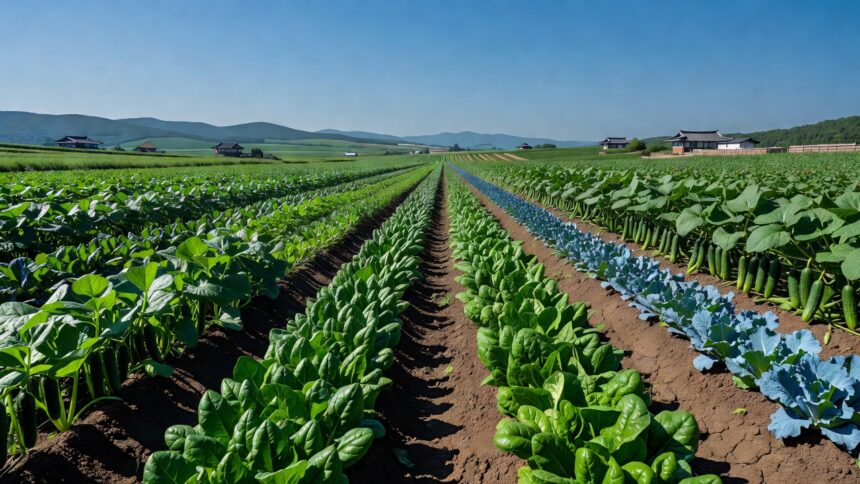


The Korea Agro-Fisheries & Food Trade Corp. reported that the retail price of 100 grams of spinach had increased 152.3 percent as of Friday from a month earlier. Prices for 10 cucumbers climbed 54.8 percent in the same period while 100 grams of blue lettuce rose 41.7 percent. The government attributed those gains directly to the prolonged heat wave, noting that leafy vegetables are especially vulnerable because they thrive in cooler conditions. Industry data also placed the flounder auction price at 22,300 won per kilogram, equivalent to $15.84, a 13.2 percent rise from a year earlier.
A total of 901,602 livestock had died because of the heat wave as of Friday, with 95 percent of the losses involving poultry such as chickens and ducks, according to the latest official figures. An additional 864,497 fish perished amid warming seas that affected aquaculture operations. Those supply losses have compounded pressure on seafood prices, which Yonhap reported are likely to stay elevated at least into September. The disruptions have rippled through supply chains that were already strained by repeated temperature records.
In response the government has moved to boost imports of broiler chickens to help stabilize domestic meat supplies. Authorities have also instructed major discount stores to offer fish products at reduced prices in coming weeks. The measures follow the heat wave’s impact on both terrestrial and marine production, Yonhap said in its dispatch. Officials expect the steps to ease some of the immediate cost increases facing consumers.
South Korea’s interior ministry put the heat wave death toll at 16 people, with 2,025 others suffering heat-related illnesses between May 15 and August 2. The Korea Meteorological Administration confirmed that the country broke its national heat record three times in a single week, with the city of Yangsan reaching an all-time high of 42.5 degrees Celsius. That reading marked the hottest temperature measured in South Korea since national weather observations began in 1904, according to meteorological records. The event ranks among the most severe in the past 120 years.
A Carbon Brief study of extreme weather impacts since 2022 found that a similar East Asian heat wave in 2024 drove South Korean cabbage prices up 70 percent. Climate Central researchers have documented that each one-degree Celsius rise in monthly temperatures generates food price inflation that persists for at least 12 months across multiple countries. The 2026 episode aligns with that pattern, as sustained high temperatures reduced crop yields and increased livestock mortality. Such data underscore the agricultural sector’s exposure to intensifying heat events.
Daytime temperatures are forecast to moderate toward 34 degrees Celsius in the coming period, according to the meteorological agency. Even with that easing, the accumulated damage to this season’s harvests will continue influencing market prices in the near term. The Korea Agro-Fisheries & Food Trade Corp. continues to track retail and wholesale figures to gauge the full extent of the supply shock.