ع




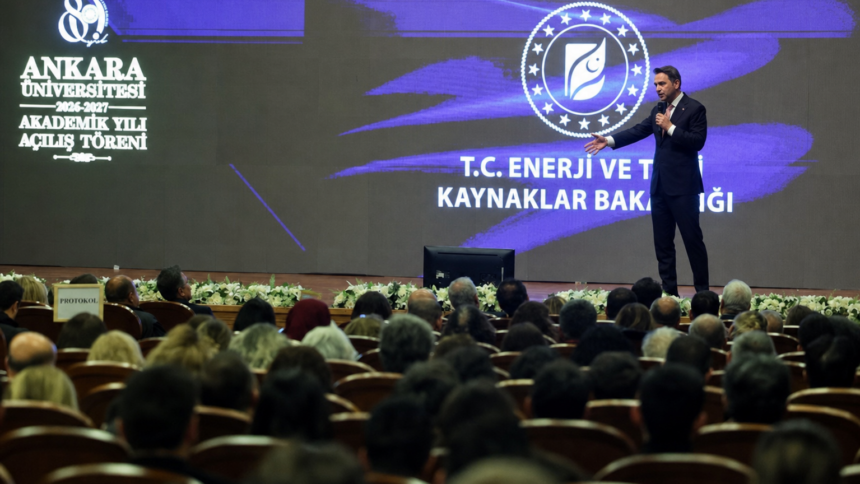


Energy and Natural Resources Minister Alparslan Bayraktar outlined Türkiye’s updated energy strategy during a ceremony marking the start of Ankara University’s 2026-2027 academic year. The minister stated that renewable energy investments will strengthen supply security, reduce dependence on imports and contribute to climate objectives, describing the 70 percent target for 2040 as both important and ambitious. According to Bayraktar, solar, wind, hydropower and geothermal resources must be developed in an environmentally compatible manner to meet rising demand while addressing the three core challenges of satisfying growing consumption, lowering foreign reliance and achieving net-zero emissions by 2053.
Bayraktar added that Türkiye plans to direct $20 billion toward energy efficiency initiatives between 2024 and 2030 as part of the broader framework. The ministry’s announcement also detailed efforts to expand domestic natural gas production in the Black Sea, where output is expected to double from 2027 and quadruple by 2028 following deployment of the Osman Gazi floating production platform. Enerdata reported that these steps form part of a wider push that includes oil output targets at the Gabar field exceeding 100,000 barrels per day in 2027.
Current renewable capacity has reached more than 42,000 megawatts from wind and solar combined as of mid-2026, according to ministry figures. The government had previously targeted 120 gigawatts of wind and solar by 2035, a benchmark that officials indicate will be reinforced with stronger goals extending to 2040 in the National Energy Plan scheduled for release on November 5. A ministry assessment found that per capita electricity consumption is projected to double by 2040, necessitating substantial new infrastructure across generation, storage and transmission.
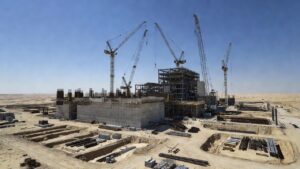
Nuclear power development continues alongside the renewable expansion, with final tests underway on the first reactor at the 4.8-gigawatt Akkuyu plant. Bayraktar noted that the remaining three reactors are slated to come online successively between 2026 and 2028, providing a stable baseload complement to intermittent sources. The Turkish Ministry of Energy and Natural Resources indicated that these nuclear additions will help diversify the mix as overall electricity demand climbs toward 510 terawatt-hours by 2030.
The forthcoming Vision 2040 roadmap anticipates investments surpassing $300 billion across energy and mining through 2040, with public and private sectors sharing the burden. Bayraktar previously stated that grid enhancements alone will require at least $80 billion by 2035, a figure expected to rise with the extended planning horizon to accommodate greater electrification and renewable integration. According to local reports citing the minister, domestic manufacturing content now stands near 90 percent for solar equipment and 60 to 65 percent for wind turbines.
The strategy aligns with Türkiye’s updated nationally determined contribution under the Paris Agreement, which commits to a 41 percent emissions reduction below business-as-usual levels by 2030. Ministry data places the current share of renewables in electricity generation at around 40 percent, a level that has grown steadily from hydropower, wind and solar additions over the past decade. Bayraktar emphasized that without accelerated grid flexibility, storage and interconnections, the numerical targets risk remaining unfulfilled.