ع
ع



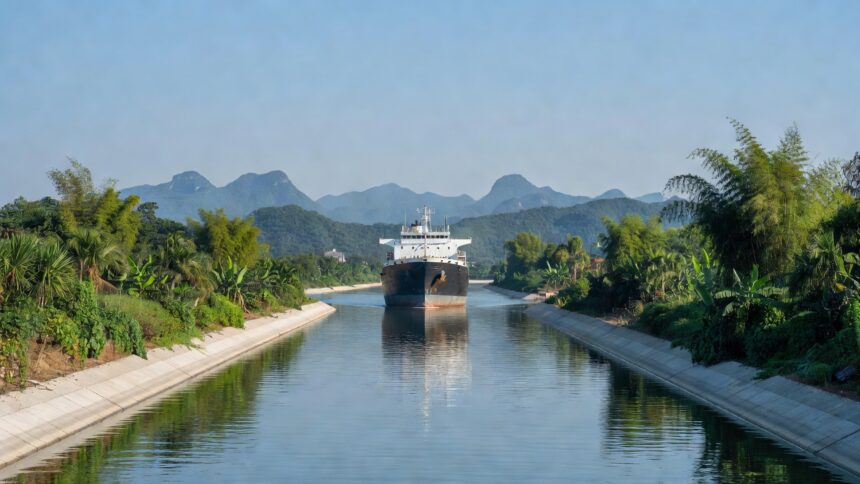


The Pinglu Canal, spanning 134.2 kilometres through China’s Guangxi Zhuang Autonomous Region, officially opened on September 15, 2026 as a strategic link connecting inland rivers to the Beibu Gulf and onward to ASEAN destinations. According to the Emirates News Agency, the project aims to boost regional connectivity and trade flows between China and Southeast Asian nations. It represents the first major river-to-sea canal developed at the national level since 1949 and forms the backbone of the New International Land-Sea Trade Corridor, which has already recorded strong growth in recent months.
A Straits Times report placed the construction cost at $13.7 billion and noted that the waterway will reduce the shipping distance from China’s western provinces to Singapore by up to 740 kilometres. Global Times data shows the canal shortens journeys by 560 kilometres compared with routes via Guangzhou, potentially saving more than 5.2 billion yuan in annual transportation costs. Beibu Gulf International Port Group officials indicated that initial cargo throughput could reach 3.5 million tonnes, with long-term capacity expanding to 150 million tonnes per year. The project is expected to accommodate vessels of up to 5,000 tons.
Logistics operators have projected that overall transport costs could decline by 30 to 40 percent once the canal becomes fully operational, benefiting industries ranging from agriculture to manufacturing. One vice president of a company told Global Times that his firm expects to double export volumes to Southeast Asia by passing on the savings. The development coincides with a 15.7 percent increase in China-ASEAN trade to 2.75 trillion yuan in the first four months of the year, according to Chinese customs authorities.
Vessel trials involving 5,000-tonne and smaller ships were successfully completed in the weeks leading up to the inauguration, Xinhua News Agency reported. The canal will enable faster delivery of fresh produce from China to ASEAN markets within three days in some cases. ASEAN diplomatic envoys who inspected the facility described it as a project that connects not only economies but also people across the region.
The initiative supports the implementation of the China-ASEAN Free Trade Area 3.0 Upgrade Protocol and strengthens supply chain integration amid growing bilateral commerce. Guangxi authorities have invested in nearly 60 related projects worth over 12.5 billion yuan around the Beibu Gulf ports to capitalize on the new route. Trade through the broader corridor hit a record 517 billion yuan in the first half of 2026, marking a 13 percent rise from the previous year, Chongqing government figures show.