ع
ع



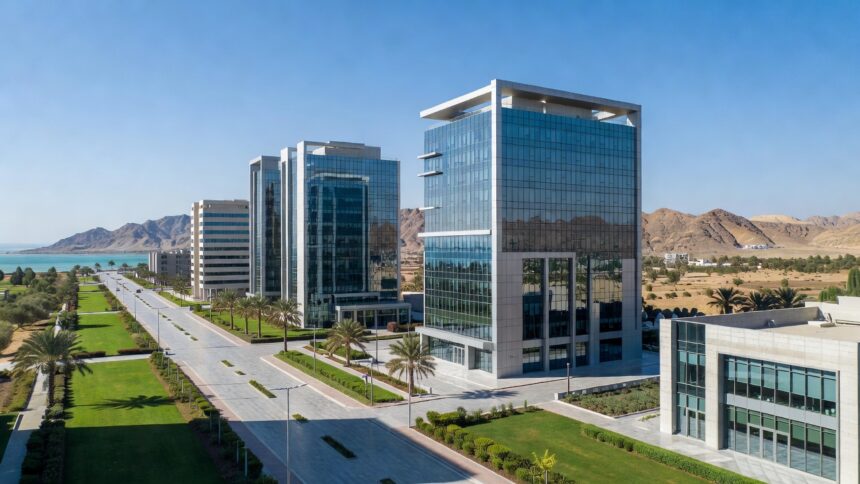


The Omani government has approved the establishment of the Oman Global Financial Centre, which will operate with legislative, administrative and regulatory independence under a new financial, judicial and legislative framework aligned with global standards, according to the state news agency ONA. Finance Minister Sultan bin Salim Al Habsi, who also chairs the Financial and Economic Committee at the Council of Ministers, stated that the centre will enhance the financial sector’s role in achieving economic diversification goals. Al Habsi added that the initiative will provide an enabling environment for investment management, company formation and business partnerships while supporting capital flows, financial services and innovation. The minister further noted that Oman will leverage its political stability, investment appeal and wide-ranging international economic partnerships through the new centre.
A Royal Decree issued on January 12, 2026, formally created the International Financial Centre of Oman as an independent legal and financial entity reporting to the Deputy Prime Minister for Economy and Finance, Ernst & Young reported in late January. The centre will be located in Madinat Al Irfan in Muscat and feature its own judicial system with a Primary Court and Court of Appeal to resolve disputes efficiently. Tax incentives include exemptions from income tax for eligible activities for up to 50 years, relief for non-residents on certain income, and treatment as a special zone for value-added tax purposes, the professional services firm noted. The decree also facilitates entry visas and residence permits for non-Omani talent and their families.
Oman’s non-hydrocarbon activities accounted for nearly 70 percent of total GDP in 2024, yet hydrocarbon receipts still represented around 80 percent of government revenue, according to an International Monetary Fund assessment. The IMF projected real GDP growth to reach 3.7 percent in 2026, driven by non-oil sectors including manufacturing, logistics, tourism and renewable energy as well as the gradual easing of OPEC+ oil production limits. The Eleventh Five-Year Development Plan for 2026-2030, aligned with Oman Vision 2040, seeks to accelerate this diversification and improve fiscal sustainability, the IMF staff visit summary from mid-2025 indicated.
The centre forms part of broader reforms that include a planned 5 percent personal income tax on annual earnings above 42,000 Omani rials starting in 2028 and a golden visa programme launched in August 2025 to draw foreign investors, the Economy Middle East report said. These measures aim to lower the contribution of oil revenue to GDP by 15 percent by 2030 and by an additional 18 percent by 2040. Public Authority for Investment Promotion and Export Development data has highlighted Oman’s strategic location and free trade agreements as key advantages for the new financial hub.
Oman’s initiative mirrors developments across the Gulf, where established centres have recorded robust expansion, the Abu Dhabi Global Market reported that it held more than 11,000 active licences by the middle of 2025 with assets under management rising 42 percent in the first half of the year. The Dubai International Financial Centre and Qatar Financial Centre have similarly attracted global firms through distinct legal and regulatory regimes, while Saudi Arabia’s King Abdullah Financial District supports Vision 2030 by hosting regional headquarters of major banks and asset managers. Such precedents underscore the competitive landscape Oman seeks to join with its independently governed centre.
Licensed entities within the Oman centre may open branches or invest outside its boundaries under applicable rules, while certain promotional activities across the Sultanate remain subject to its regulations, according to the Royal Decree summary published by Pinsent Masons. The governing council, appointed by royal order, will oversee operations and meet at least twice annually to set procedures and invite non-voting experts as needed. Authorities expect the framework to strengthen Oman’s integration into global financial markets while creating high-quality employment opportunities consistent with long-term national development objectives.