ع




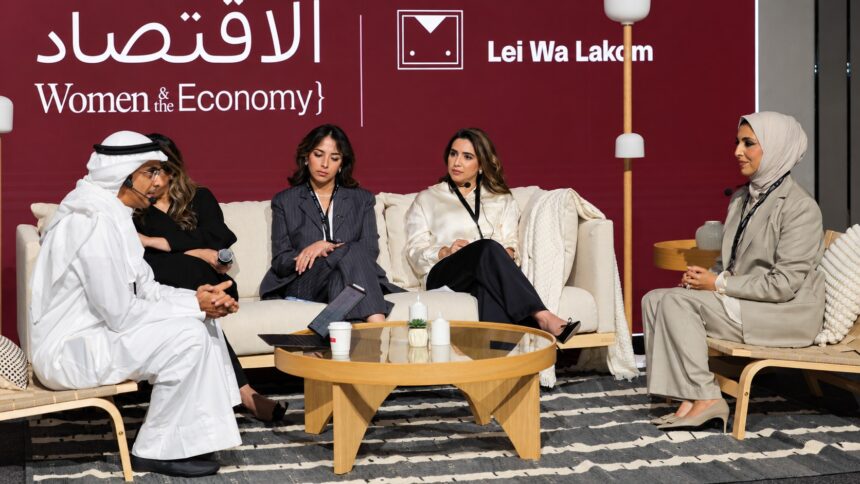


Financing, business support and opportunities to lead form part of Shaikha AlMugahwi’s vision for women’s economic participation, outlined in an interview with Diwaniya Media.
Helping women turn business ideas into established companies is an important responsibility for financial institutions, according to Shaikha AlMugahwi, Executive Manager of Premium Sales at Kuwait Finance House.
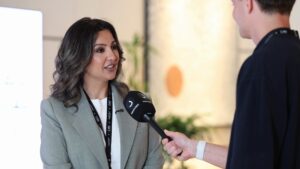
Speaking to Diwaniya Media during Lei Wa Lakom’s Women & the Economy conference in Kuwait, AlMugahwi connected the development of female leaders inside banks with support for women building businesses outside them. Both, she said, belong in the discussion about women’s contribution to the economy.
“We also have an important role as financial institutions supporting female entrepreneurs by providing financial solutions and helping them turn their ideas into successful businesses,” she said.
Her comments come during a year in which KFH has worked with the United Nations Development Programme on SME training and continued its own business sustainability programme. These initiatives provide a practical backdrop to her remarks, combining financial services with support for the capabilities entrepreneurs need to develop their companies.
From banking careers to business ownership
AlMugahwi began with the contribution women already make to Kuwait’s economy, drawing on her experience in the financial sector.
“Today, women in Kuwait play an important role in the economy, particularly in the banking and financial sector,” she said.
Her account places professional development and entrepreneurship within the same wider picture. Women contribute as employees and managers, while business ownership creates another route through which they can take decisions, develop commercial ideas and participate in economic activity.
Within financial institutions, AlMugahwi emphasised investment in people over the course of their careers. For entrepreneurs, she highlighted the role of financial solutions in helping an idea become a business.
These are different relationships, but both involve giving women the resources and responsibility to put their abilities into practice. A bank can influence that process through the experience it offers its employees and through the support it provides to its business customers.
“At KFH, we believe that empowering women is not only about providing equal opportunities, but also about investing in their professional development and preparing them for leadership positions,” she said.
Business support alongside financing
KFH’s work with SMEs offers a concrete example of how financial institutions engage with entrepreneurs beyond their day-to-day banking requirements.
In January 2026, KFH and UNDP launched the Growing Sustainably training programme for SME founders and senior executives in Kuwait. Its stated aims included improving operational performance, assessing sustainability readiness and strengthening access to sustainable and green financing opportunities.
The programme also addressed governance and risk management. Those subjects connect the operation of a business with its preparations for future financing, placing the development of management capabilities alongside access to financial services.
In its announcement, UNDP reported that SMEs represent nearly 90% of businesses in Kuwait, operating across sectors including trade, hospitality, construction and industry. The figure describes the overall SME sector and illustrates why support for smaller companies features in discussions about Kuwait’s economic diversification.
For AlMugahwi, female entrepreneurs are part of that wider business landscape. Her emphasis on helping women develop their ideas brings the financing relationship into a discussion often centred on employment and career progression.
A continuing focus on SME development
In September, KFH announced the second edition of its Business Sustainability Program for SMEs, describing support for companies integrating sustainability into their operations, strategies and business models.
The bank outlined an approach combining banking and financing services with advisory support and knowledge exchange. Its announcement presented business development as an ongoing relationship with SME customers, covering both financial requirements and the way companies prepare for growth.
These programmes serve the wider SME market. They provide context for AlMugahwi’s comments about female entrepreneurship without constituting a separate women-only financing initiative.
The connection is practical: her interview identifies support for women-owned businesses as an important responsibility, while the bank’s wider SME activities show some of the channels through which financial institutions work with entrepreneurs. Financing, advice and management development each address a different part of establishing and running a company.
International experience shows the scale of targeted finance
An international example illustrates how financial institutions have combined these forms of support for women-owned businesses.
In September 2025, the International Finance Corporation reported that its Women Entrepreneurs Opportunity Facility with Goldman Sachs 10,000 Women had reached more than 267,000 women entrepreneurs across 59 countries.
Established in 2014, the facility worked through partner financial institutions to expand financing for women-owned SMEs in emerging markets. IFC reported $3.17 billion in investments unlocked and $8.2 billion in cumulative loans to women entrepreneurs.
The two figures measure different aspects of the programme: investment mobilised through the facility and cumulative lending to entrepreneurs. Alongside capital, the initiative included advisory services and programmes designed to strengthen business capabilities.
These international results offer context for the financing model rather than a comparison with Kuwait. They demonstrate the scale at which financial institutions can organise support around women-owned enterprises, combining access to funds with knowledge and assistance in developing a business.
Opportunities to make decisions
AlMugahwi’s comments returned repeatedly to responsibility: women gaining experience by leading projects, making decisions and applying what they have learned.
“Throughout my career at KFH, I have seen how giving women the right opportunities, responsibilities, and support can help them grow into confident leaders and decision-makers,” she said.
She identified training and mentorship as priorities, together with practical opportunities to lead. That combination gives professional development a clear purpose, connecting learning with the experience of taking responsibility for work and its outcomes.
Her definition of empowerment extends across employment, leadership and entrepreneurship.
“For me, true women empowerment is not just about having women in the workplace; it’s about giving them the opportunity to grow, lead, and make a real impact on the economy,” she said.
AlMugahwi’s comments bring female entrepreneurship into Kuwait’s wider discussion about economic participation. Alongside developing future banking leaders, she sees a practical role for financial institutions in helping women turn business ideas into established companies through financing, professional support and opportunities to grow.