ع
ع



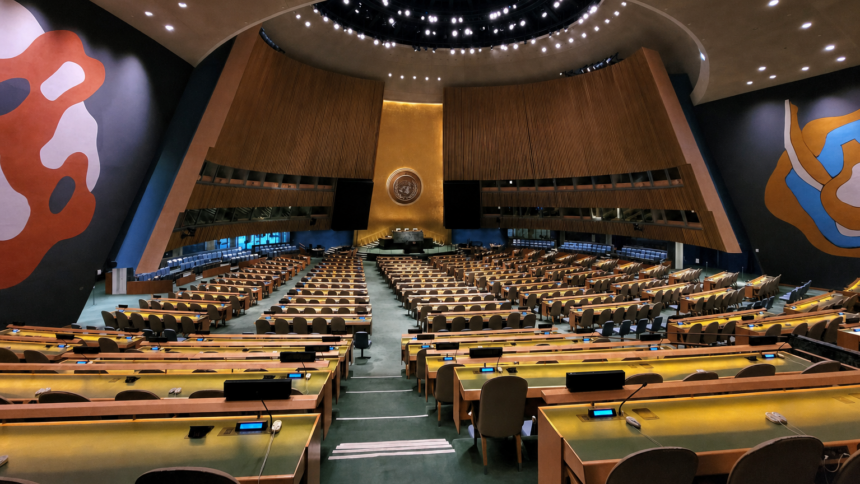


The United Nations General Assembly adopted the declaration by acclamation following intense negotiations co-facilitated by Australia and Cabo Verde, according to the UN. The text stresses that sea level rise poses cumulative, severe and irreversible risks that require stronger international cooperation and coordinated action at all levels. It affirms the need to implement international law, including the United Nations Convention on the Law of the Sea, while emphasizing science-based adaptation and mitigation measures. The declaration also commends the leadership of small island developing states in highlighting the issue.
UN Secretary-General António Guterres warned that global sea levels rose by almost six millimetres in 2024, the largest annual increase on record, a UN assessment found. He described sea-level rise as a threat multiplier that batters economies, trade, infrastructure and food systems while noting that around 770 million people live less than five metres above the high-tide line. Without significant adaptation and mitigation, risks facing coastal cities and communities are projected to increase at least tenfold by 2100, Guterres added. The declaration highlights the importance of improved data availability, risk assessments, early warning systems and long-term planning to build resilience.
A World Meteorological Organization review integrated into the declaration points to accelerating rise driven by ocean warming and melting ice sheets, with the UN Specialized Agencies providing essential coordination on related data. The text calls for improved tools to ensure data coherence and uptake, particularly to overcome capacity constraints in vulnerable countries. It further underscores that all states may address sea level rise impacts at national, regional and international levels in exercise of their sovereignty.
The declaration places strong emphasis on finance, seeking more predictable and accessible funding for resilience projects, especially in small island developing states and least developed countries, according to the adopted text. UN officials noted that investing in resilience now costs far less than addressing loss and damage later, framing it as a critical economic imperative for global markets and supply chains. This focus aligns with broader efforts to mobilise resources that protect livelihoods, cultural heritage and investment in coastal infrastructure against escalating threats.
International law provisions in the declaration include a presumption in favour of continued statehood and the ability to maintain maritime zones, a key concern for trade-dependent nations and exclusive economic zones, the UN reported. The document takes note of prior initiatives, including the 1989 Malé Declaration, the 2021 and 2023 Pacific Islands Forum declarations, and the 2024 Alliance of Small Island States declaration on statehood. Prime Minister Francisco Carvalho of Cabo Verde stated that the consensus approval demonstrates that multilateralism still works in addressing such challenges.
Adoption of the declaration follows a high-level meeting during the opening of the 81st General Assembly session, building on General Assembly decision 78/558 that mandated the process, a UN summary showed. It aims to enhance action across disaster risk reduction, sustainable development and climate finance streams that influence global investment decisions. The text concludes by urging collective implementation to safeguard economic stability and the future of coastal populations worldwide.