ع
ع



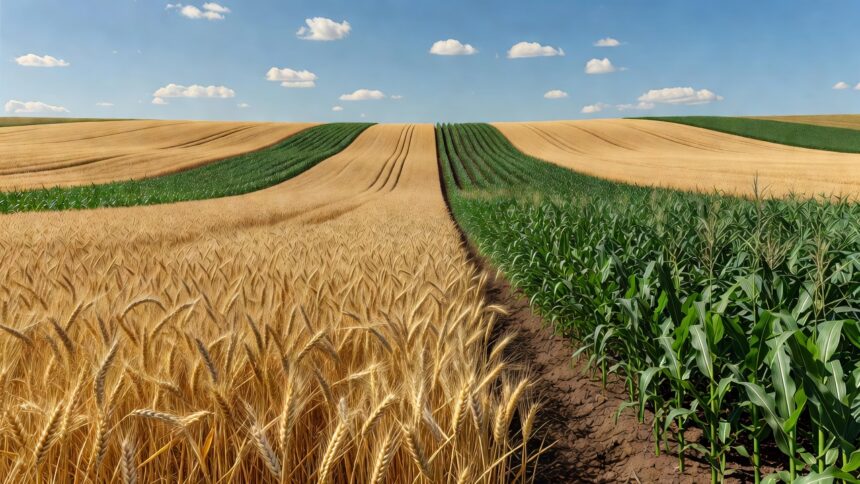


The Food and Agriculture Organization forecast global cereal production in 2026 at 2.98 billion tonnes, a 2 percent decline from the 2025 record but still the second-highest output on record, according to its latest Cereal Supply and Demand Brief. Maize output is projected at 1.309 billion tonnes, wheat at 810.7 million tonnes and rice at 553.1 million tonnes on a milled basis. These figures come as the UN agency incorporates the latest assessments of weather impacts and planting decisions across key regions.
Worsening crop prospects in France and Poland due to persistent summer heat and dryness prompted a downward revision to the global maize forecast, the FAO assessment found. Wheat production faces reductions in Australia linked to a higher likelihood of El Niño-related below-average rainfall and elevated input costs, even after some recent precipitation. Rice output is expected to ease amid reduced producer margins and weather conditions often tied to the El Niño phenomenon in parts of Asia.
World cereal utilization in the 2026-27 season stands at 2.965 billion tonnes under the latest projection, up 0.2 percent from the previous year with gains in coarse grains and rice use offsetting lower wheat consumption, FAO figures show. Cereal stocks are anticipated to reach 947.2 million tonnes by the close of the 2027 seasons, slightly above opening levels partly due to wheat reserve builds in the Russian Federation and Ukraine. The resulting stocks-to-use ratio is seen at 31.6 percent, down modestly from the prior season but still within a range that indicates relatively comfortable global supplies from a historical perspective.
Global trade in cereals is projected to fall to 509.3 million tonnes in 2026-27 from recent peaks, according to the FAO brief. Restricted export routes have played a role in the stock accumulation observed in some major producers. The projections arrive against a backdrop of ongoing geopolitical tensions and macroeconomic pressures that have weighed on market stability in recent years.
A separate OECD-FAO Agricultural Outlook projects world cereal production to expand to 3.24 billion tonnes by 2035, driven primarily by yield improvements rather than increases in harvested area. Low and lower-middle income countries are expected to account for faster growth rates in output over that period compared with higher-income nations. India in particular is anticipated to contribute significantly to gains in wheat and rice under those longer-term assumptions.
The FAO plans to release its next Cereal Supply and Demand Brief update in early October, when further refinements to the 2026 forecasts may emerge based on evolving harvest data. The current outlook highlights how weather variability continues to shape production expectations even as prior record harvests have helped sustain stock levels.