ع
ع


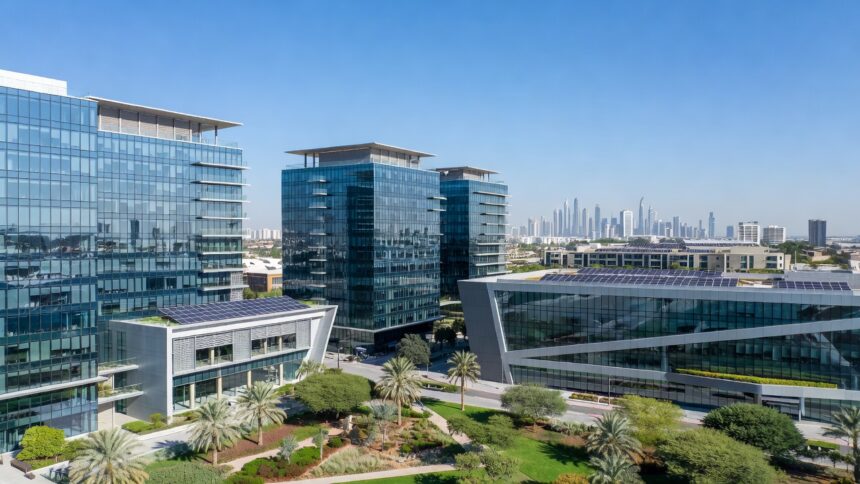


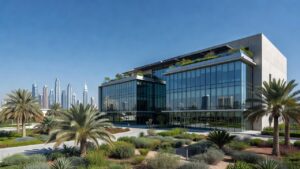
Emirates Green Building Council announced the forthcoming release of its third energy and water benchmarking report which will become the first in a planned annual series developed with Meyaar as technical partner. The document draws on operational records from 2022 to 2024 for most categories and through 2025 for schools to establish indicative performance ranges for hotels malls office buildings and schools. The launch event is set for September 10 in Dubai and forms part of the 2026 edition of World Green Building Week WAM reported on the council’s statement.
EmiratesGBC first published a benchmarking study for the hospitality sector in 2016 after collecting data from 46 participating hotels over three years. That assessment identified wide differences in consumption patterns and set initial reference points for energy and water use across the UAE. A follow-up 2019 report produced under the Building Efficiency Accelerator project supplied median figures such as 252 kilowatt hours per square metre per year for a typical Dubai hotel according to EmiratesGBC publications.
The council’s earlier analyses showed that best-performing hotels consumed 58 percent less energy per unit area than the weakest while similar gaps appeared in schools and malls. These performance variations have informed retrofit programmes and training modules introduced in subsequent years. Dubai Supreme Council of Energy data from 2019 indicated that older properties and higher-rated hotels tended to register higher consumption levels than more recently constructed facilities.
Buildings continue to represent a substantial share of national resource demand prompting sustained regulatory attention across the UAE. By late 2024 approximately 55 000 structures in Dubai had satisfied green building codes yielding measurable reductions in electricity and water use the Dubai Supreme Council of Energy reported. Such outcomes support the national net-zero emissions objective set for 2050 that the Ministry of Energy and Infrastructure has reiterated in successive policy statements.
The September 10 launch will run from 9am to noon and coincides with additional World Green Building Week sessions on female leadership in sustainability and low-carbon material adoption. EmiratesGBC has described the benchmark as a tool to enable more informed operational choices and accelerate efficiency gains across the built environment. The annual cycle now under way is intended to deliver timely updates that reflect changes in building stock and technology according to the council’s announcement.
DEWA statistics placed commercial electricity consumption above 37 000 gigawatt hours in 2023 while residential and industrial sectors added further demand. Water supply relies primarily on desalination with total requirements tracked annually by the Ministry of Energy and Infrastructure. The new benchmark aims to provide current reference values that participants can apply to identify improvement opportunities in their own portfolios.
Stakeholders from across government industry and education have been invited to the Dubai event to examine the report findings. EmiratesGBC noted that the benchmark expands on prior sector-specific studies by incorporating offices and refreshed data for all covered categories. The initiative aligns with global efforts coordinated by the World Green Building Council during the September 7 to 11 observance.