ع
ع





The top decision-making body of the ruling Communist Party acknowledged difficulties and challenges facing the economy during its meeting, according to a summary released by the official Xinhua news agency. Leaders directed authorities to accelerate the pace of fiscal expenditure on projects that had already received allocations for the remainder of the year. This approach reflects Beijing’s preference for measured support that avoids widening the fiscal deficit while addressing industrial overcapacity and local government debt constraints.
Second-quarter economic growth stood at 4.3 percent, missing the lower end of the full-year target range of 4.5 percent to 5.0 percent, National Bureau of Statistics data show. A stronger-than-expected performance in the first half nevertheless allows policymakers to refrain from aggressive new measures, an assessment from OCBC Bank indicated. Tommy Xie, head of Asia macro research at the bank, stated there was no major policy bazooka and that the focus in the third quarter will likely center on accelerating deployment of existing policy resources.
The Politburo signaled it would continue to comprehensively rectify involution competition, a term describing destructive price wars among manufacturers that erode profits, Xinhua reported. Beijing has rejected descriptions of widespread industrial overcapacity even as it presses indebted local governments to contain spending. Most analysts agree that fast-tracking budgeted national infrastructure projects can stabilize growth in coming months without additional fiscal expansion, according to a senior economist at the Economist Intelligence Unit.
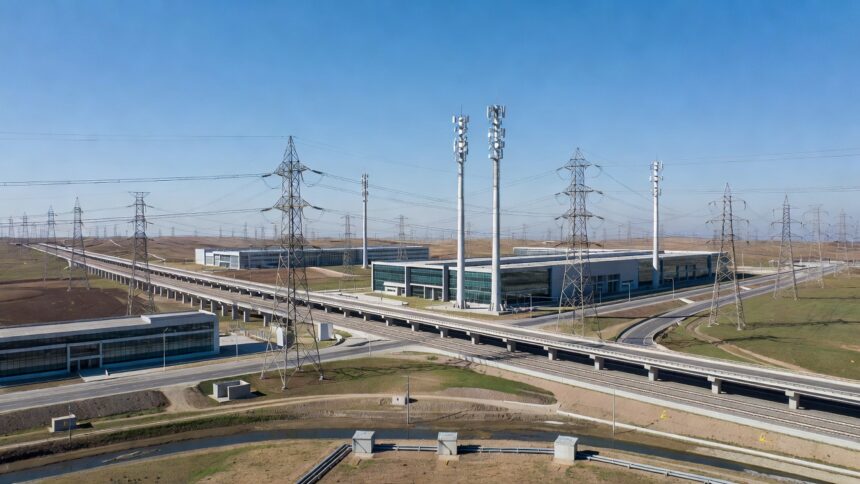
Spending acceleration is expected to target the six networks initiative covering water systems, logistics networks, underground pipelines, power grids, telecommunications and computing power centers, JD.com chief economist Jianguang Shen noted. Bond issuance and related outlays lagged behind plans in the first half of the year, leaving room to ramp up implementation, Shen added. State media have indicated that Beijing aims to allocate roughly one trillion dollars to these projects over the full year.
The second-quarter slowdown stemmed primarily from weak household consumption that offset robust manufacturing and export performance, a Reuters analysis found. As capital flows toward advanced manufacturing and technological research, a subdued job market, stagnant incomes and the protracted property downturn continue to suppress consumer activity. This pattern has increased China’s dependence on external demand, raising concerns among trading partners about impacts on their domestic industries and labor markets.
The Politburo also called for measures to boost domestic demand, increase employment support for key groups and safeguard the rights of flexible workers in new employment forms, according to the Xinhua summary. Economists have voiced skepticism that such steps will include direct income support for households, with Pinpoint Asset Management chief economist Zhiwei Zhang observing that the emphasis appears to rest on improving the supply of goods and services rather than lifting income growth. China’s leaders have maintained that the policy toolkit retains flexibility to respond to evolving conditions without resorting to large-scale stimulus.