ع
ع



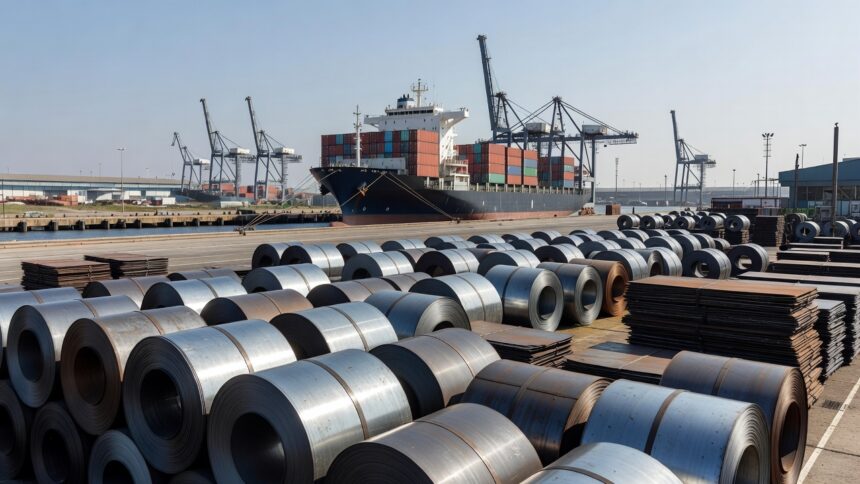


The Brazilian ministries of Foreign Affairs and of Development, Industry, Trade and Services issued a joint statement criticising the European Union’s new quantitative restrictions on steel imports and higher tariffs on excess quantities, which they described as unilateral measures. The statement, reported by WAM on the same day, emphasised that the changes will limit Brazil’s access to the European market and fail to resolve excess global steel capacity largely stemming from Asian producers. Brazilian officials rejected any notion that the country contributes to the overproduction problem and noted that no compensation agreement had been reached as required under international trade rules.
The EU’s updated regime, which followed the expiry of a safeguard system from 2018, sets tariff-free quotas for Brazil at around 227,000 tons while applying elevated tariffs beyond those limits, a POLITICO assessment found.[[1]](https://www.politico.eu/article/brazil-backlash-spells-trouble-for-eu-steel-deals/) Brazil’s steel exports to Europe dropped from 700,000 metric tons in 2022 to 156,000 tons in 2024, according to the same report. The ministries warned that targeting countries not responsible for the global oversupply risks triggering an escalation of trade defence measures across partners.
Brazil has maintained it will continue advocating for multilateral solutions in international forums while pursuing bilateral negotiations with the EU to reach a mutually acceptable outcome, the statement said. The government highlighted that the new restrictions affect most of the bloc’s trading partners and do not contribute to an effective resolution of the steel industry’s challenges. Officials reiterated that Brazil itself has been impacted by the overcapacity issue originating elsewhere.
The criticism arrives after Brazil enacted the Economic Reciprocity Law in 2025, which authorises countermeasures including import duties, suspension of intellectual property rights and other trade concessions in response to unilateral foreign barriers, a Baker McKenzie review of the legislation stated.[[2]](https://insightplus.bakermckenzie.com/bm/intellectual-property/brazil-publication-of-decree-regulating-the-economic-reciprocity-law) A subsequent decree published in July 2025 established procedures for both provisional and ordinary retaliatory steps through an interministerial committee. The framework has been referenced in responses to various external trade actions, including those from the United States.
In parallel developments with Washington, Brazil prepared potential responses to additional U.S. tariffs announced in 2026, with options such as suspending patent protections for pharmaceuticals and agricultural seeds under consideration, Reuters sources reported.[[3]](https://www.reuters.com/world/americas/brazil-readies-tough-retaliation-new-trump-tariffs-sources-say-2026-07-16/) Vice President Geraldo Alckmin indicated that President Luiz Inácio Lula da Silva would determine the timing and scope of any reciprocity measures. The Brazilian government has stressed it will utilise all available instruments to protect its economy, employment and income levels.
The EU’s steel measures have also complicated aspects of the Mercosur-EU trade agreement that entered into force earlier in 2026, according to a separate POLITICO analysis.[[1]](https://www.politico.eu/article/brazil-backlash-spells-trouble-for-eu-steel-deals/) Brazilian authorities have denied the existence of any side understanding on steel compensation with the bloc. Negotiations are expected to address compensation claims under GATT Article XXVIII to avoid further disputes.