ع






The Customs Tariff Commission of the State Council said the adjustment applies to measures outlined in a 2025 announcement and will take effect at 1:01 p.m. on November 10 in accordance with Chinese laws and international principles. This decision follows the outcomes of the September summit between the Chinese and US heads of state, where both sides agreed to prolong their tariff arrangements. China’s Ministry of Commerce separately confirmed the extension of suspensions on measures against 11 US entities on the unreliable entities list and export controls involving 16 other US firms until January 10, 2027.
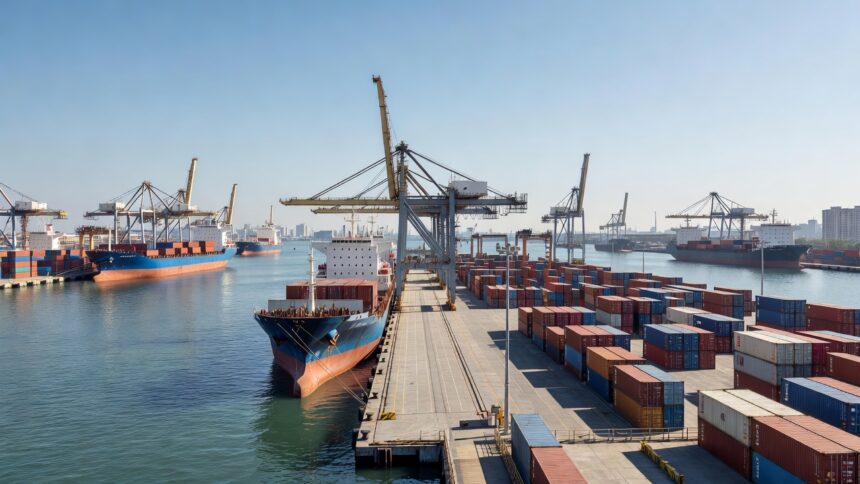
China’s Transport Ministry indicated that special port fees on US-linked vessels will remain suspended through the same date, alongside a continued pause on a probe into shipping and shipbuilding supply chain security. The commerce ministry will also extend the suspension of sanctions on five US-linked units of South Korean shipbuilder Hanwha Ocean for two months. These coordinated steps aim to create a more predictable environment for businesses engaged in bilateral trade, according to statements from the involved agencies.
The extension builds on a November 2025 arrangement that held the 24 percent additional tariff in abeyance for one year while maintaining the 10 percent rate, a framework that originated from economic talks in Kuala Lumpur. Subsequent consultations in New York and Washington during September 2026 broadened the truce until January 10, 2027, the Ministry of Commerce reported. A $60 billion package of reciprocal tariff cuts proposed after the Washington summit, including roughly $17 billion in US farm goods imported by China in 2024, has yet to be finalized, Reuters reported.
Bilateral goods trade between the two economies expanded despite the tensions, with China’s General Administration of Customs data placing the total at 3.18 trillion yuan, equivalent to about $476.5 billion, for the first three quarters of 2026, marking a 4.1 percent year-on-year increase. Peterson Institute for International Economics figures show average US tariffs on Chinese exports standing at 35.2 percent as of August 2026, covering 89 percent of goods, while Chinese tariffs on US products averaged 31.9 percent across all imports. A Congressional Research Service assessment noted that both sides have adjusted rates multiple times since 2025, with average US duties on China falling to 36.5 percent by July after various pauses and replacements of invalidated emergency tariffs.
The latest move comes as Presidents Xi Jinping and Donald Trump are expected to meet at the APEC summit in China next week, according to Reuters. US Treasury Secretary Scott Bessent had previously described the two-month extension as providing additional time to advance economic discussions. China’s statements emphasized close monitoring of US plans to shift from invalidated IEEPA tariffs to those under Section 301 of the Trade Act, with potential adjustments to countermeasures based on developments.
Analysts cited by the Global Times described the extensions as offering certainty for enterprises and markets while reflecting progress in translating high-level agreements into policy. The commission stated that the continued suspension supports stable policy conditions for cooperation between companies in both countries and promotes steady development of economic and trade relations. China’s transport ministry and commerce ministry issued parallel announcements detailing the maritime and entity-related suspensions to align with the overall truce framework.