ع




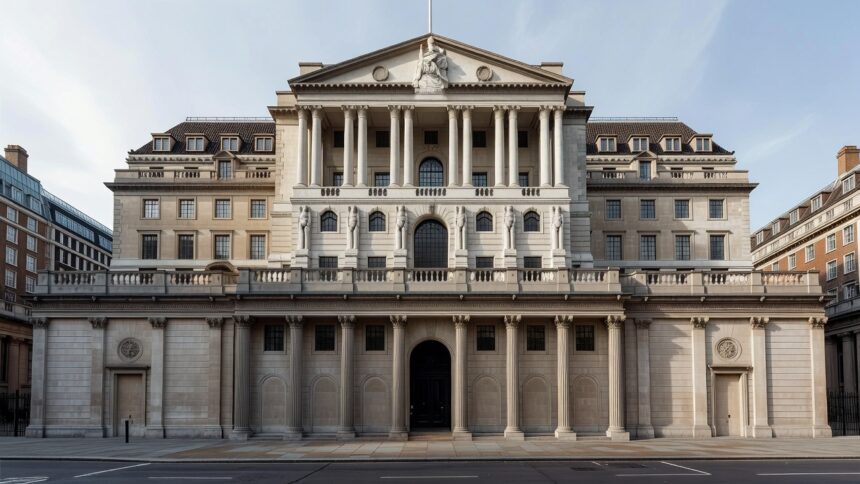


The Bank of England’s Monetary Policy Committee lifted its key interest rate by 25 basis points to 4 percent on November 5 2026 marking the first such increase since August 2023 according to a statement from the central bank. Policymakers voted 8-1 in favor of the move with external member Catherine Mann dissenting in favor of a larger half-point rise to 4.25 percent. Governor Andrew Bailey said the decision reflected sufficient inflationary pressure in the pipeline from higher energy costs tied to the prolonged US-Iran conflict. The central bank noted that businesses have begun passing on costs more readily than in prior periods when inflation peaked above 11 percent.
A Bank of England forecast warned that consumer prices could approach 5 percent next year without further policy adjustment an outlook shaped by persistent global energy volatility. Office for National Statistics data placed UK inflation at 3.5 percent in September well above the 2 percent target and the 3 percent level the central bank had projected in July. The surprise acceleration has forced the BoE to abandon its recent easing path after five rate cuts that brought borrowing costs down from a 5.25 percent peak in 2023.
Bailey stated that the hike should not be viewed as the start of an inevitably long sequence of increases yet added that neither does it seem likely to be the last unless the Iran war resolves quickly. “There is now enough inflationary pressure in the pipeline caused by the rise in energy prices that an increase in Bank Rate is warranted” Bailey said in the announcement. Chief economist Huw Pill described the step as significant in addressing threats to price stability including uncertainty surrounding events in the Middle East and their influence on energy prices.
The move brings the BoE into line with other major central banks that had already tightened policy in response to energy-driven inflation Reuters polling of economists showed. Both the US Federal Reserve and European Central Bank implemented rate increases in recent months to contain similar second-round effects from higher oil and gas costs. Britain’s economy has displayed more resilience than expected possibly buoyed by corporate spending on artificial intelligence according to a Reuters analysis of recent data.
Markets responded to the decision and accompanying hawkish tone by pricing in a higher probability of another increase as soon as December Bloomberg data indicated. Traders had fully anticipated Wednesday’s move yet the committee’s language prompted a repricing of the policy path with futures now pointing to rates peaking above 4.5 percent by mid-2027. The central bank emphasised that future decisions would remain data-dependent focusing on the interaction between the underlying economy higher energy prices and any additional shocks.
Catherine Mann in explaining her vote for a 50 basis point hike pointed to the economy crossing into a high-inflation tight-labour-market regime where households and firms exhibit stronger second-round effects a Bank of England summary of member views reported. The committee as a whole highlighted risks that prolonged energy price volatility could embed higher inflation expectations if not addressed promptly. Separate central bank records show the rate had been held steady at 3.75 percent through much of 2026 following the final cut in December 2025.