ع


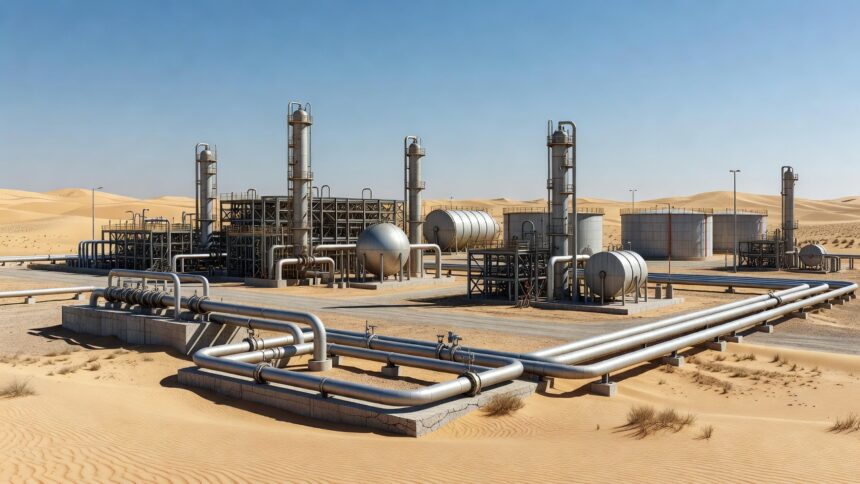


QatarEnergy said in a statement that it secured the highest recognition available under the Oil and Gas Methane Partnership 2.0 framework for its 2025 emissions reporting. The framework, managed by the United Nations Environment Programme’s International Methane Emissions Observatory, requires comprehensive measurement-based reporting and credible mitigation plans across both operated and non-operated assets. Attaining Gold Standard status confirms the quality, robustness, transparency and completeness of the company’s methane emissions inventories, according to the announcement. The designation also signals QatarEnergy’s implementation of advanced technologies to track and manage methane releases at scale.
Saad bin Sherida Al-Kaabi, Qatar’s Minister of State for Energy Affairs and the chief executive of QatarEnergy, described the result as a significant step forward. “Obtaining OGMP 2.0 Gold Standard Reporting status is an important milestone in QatarEnergy’s methane emissions management efforts,” Al-Kaabi said. “This accomplishment reflects our commitment to transparency, continuous improvement, and the application of advanced measurement technologies to manage methane emissions across our operations.” The statement emphasised that the achievement covers the full range of the company’s upstream and downstream activities.
The United Nations Environment Programme positions OGMP 2.0 as the leading international standard for methane reporting and mitigation in the oil and gas industry. Under its five-level system, Gold Standard recognition is granted only after companies demonstrate progress toward source-level measurements reconciled with independent site-level data. A 2026 UNEP assessment found that assets reaching the highest reporting tiers now account for more than 70 percent of operated methane emissions among participants.
United Nations Environment Programme figures show that 90 companies held Gold Standard status in the latest reporting cycle, an increase from 64 the year before, with QatarEnergy listed among the newly recognised participants. The same dataset places Qatar’s OGMP 2.0 coverage at 97 percent of its natural gas supply, well above the global average for leading exporters. Additional analysis within the report indicated that higher-quality Level 4 and Level 5 data reveal emissions volumes 2.3 times larger than earlier estimates and from previously under-reported sources.
Upstream operations continue to represent the largest share of reported methane emissions globally, according to the International Methane Emissions Observatory’s 2026 review of submitted data. The observatory noted that measurement-based inventories enable more targeted mitigation strategies, particularly in facilities handling natural gas processing and transport. QatarEnergy’s alignment with these standards forms part of a broader industry shift toward reconciling bottom-up inventories with top-down verification techniques.
Participation in OGMP 2.0 has expanded to cover roughly one-third of global oil and gas production, the United Nations Environment Programme reported, with members required to submit annual data and improve reporting levels over defined timelines. Companies must reach Level 4 and Level 5 reporting for material assets within three years for operated sites and five years for non-operated ventures. The latest factsheets confirm that QatarEnergy met the necessary thresholds for the 2025 data year across its portfolio.