ع


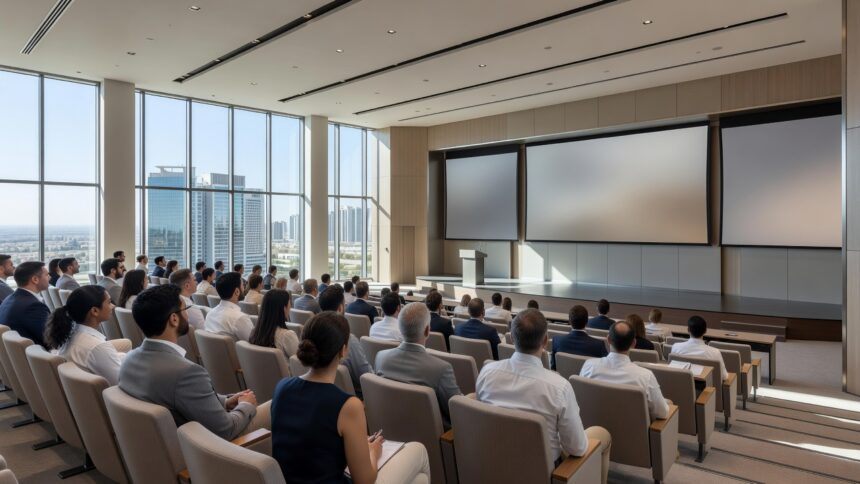


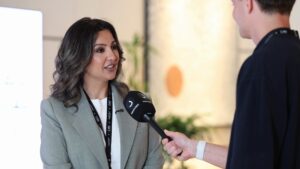
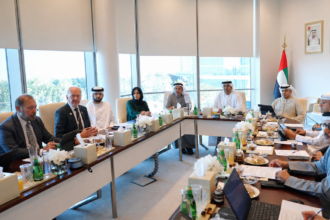
Forbes Middle East launched the fourth edition of its Sustainability Leaders Summit at the ADNEC Centre in Abu Dhabi under the patronage of the UAE Ministry of Climate Change and Environment. The two-day gathering assembles policymakers executives investors and academics from across the region and beyond to examine strategies for building resilience in economies and institutions. Participants will engage in leadership dialogues ministerial conversations and interactive sessions that address energy infrastructure artificial intelligence and natural capital according to the event organizer.
A Forbes Middle East announcement outlined four central themes for the proceedings including global leadership and strategic governance AI digital innovation and future economies impact ESG and sustainability leadership as well as stewardship. The UAE Minister of Climate Change and Environment H.E. Dr. Amna bint Abdullah Al Dahak is among the high-level speakers joined by the president of Khalifa University of Science and Technology and representatives from the International Renewable Energy Agency. Additional contributors include the CEO of Masdar City the managing director of Siemens Energy for the Middle East and Africa and the chief sustainability officer at AD Ports Group the organizer reported.
Forbes Middle East released its 2026 ranking of the Middle East’s Sustainability Leaders immediately ahead of the summit identifying 145 executives from the region’s largest companies. The list spans 17 sectors with the UAE contributing 75 entries Saudi Arabia 29 and both Qatar and Egypt 14 each according to the publication’s assessment. Evaluators examined measurable ESG commitments adoption of sustainable technologies and alignment with net-zero targets through questionnaires sustainability reports and official disclosures.
The International Renewable Energy Agency reports that renewable energy capacity across Arab countries grew 28.9 percent to reach 53.1 gigawatts in 2025. Saudi Arabia recorded an 86.8 percent increase in its renewable capacity that year while the UAE targets tripling renewable energy’s contribution and investing between 40.8 billion dollars and 54.5 billion dollars in the energy sector by 2030. These figures formed part of the context presented at the summit for ongoing regional progress.
First Abu Dhabi Bank mobilized 31.1 billion dollars in sustainable and transition finance during 2025 achieving 76 percent of its 136 billion dollar target according to the bank’s disclosures. Masdar generated 40.2 terawatt hours of clean electricity from operating projects in the same period marking a 38 percent year-on-year rise and secured financial close on a 6.1 billion dollar project featuring 5.2 gigawatts of solar capacity paired with 19 gigawatt hours of battery storage in July 2026. Saudi Energy connected roughly 17.8 gigawatts of renewable capacity to the national grid by June 2026 while Emirates Global Aluminium opened the UAE’s largest aluminium recycling plant lifting annual capacity above 400,000 tonnes.
The summit organizer noted that Abu Dhabi offers an ideal platform to exchange perspectives share experiences and build partnerships that advance practical solutions to shared challenges. Sessions will highlight the role of youth councils in fostering innovation alongside the integration of artificial intelligence in sustainable practices. Attendance reflects the growing emphasis on cross-sector collaboration to support the Middle East’s low-carbon economic shift.