ع
ع


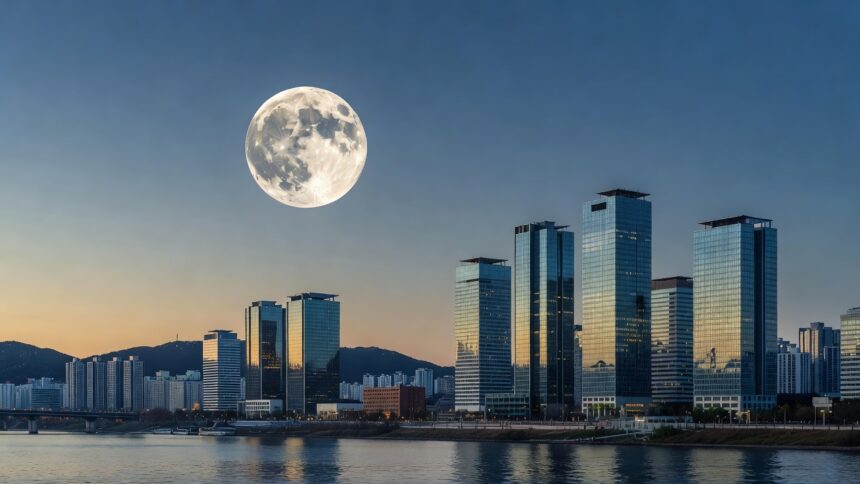


The South Korean government announced the Seven Major SEED initiative during a meeting chaired by President Lee Jae Myung. Science Minister Bae Kyung-hoon detailed the seven focus areas that include small modular reactors, fusion energy, next-generation renewable energy, quantum technology, space and aviation, advanced biotechnology, and critical minerals with materials supply chains. President Lee Jae Myung said the country should prepare its next growth drivers while the semiconductor industry booms and artificial intelligence expands rapidly. The plan addresses a shrinking working-age population that stood at nearly 35 million in May 2026 according to economic data from the Federal Reserve tracking service.
According to the science minister the initiative seeks commercial deployment of domestically developed small modular reactors by 2035 with construction of non-light-water models to begin in the 2030s. Fusion-based electricity generation is scheduled for the late 2030s while renewable energy efforts will develop ultra-efficient solar cells, advanced offshore wind technologies, hydrogen production systems and artificial intelligence-based power grid tools. A government press release provided the renewable energy component details. Bae Kyung-hoon stated that authorities will help these projects advance to build a Korea that no one can rival in 10 or 20 years.
Quantum technology targets under the initiative include development of a domestic error-corrected 100-qubit processor by 2029 with the goal of becoming the world’s leading quantum-chip manufacturing nation by 2035. Space plans feature a domestic moon landing mission in 2030 using South Korean technology, a second lunar lander mission in 2032 and construction of an independent low-Earth-orbit satellite communications network by 2035. This lunar target accelerates an earlier timeline that had set a civilian-led rover project for 2032 according to the Korea Aerospace Administration. The government will also pursue technologies for space data centres and support participation in next-generation commercial aircraft programmes.
Biotechnology elements call for establishment of an artificial intelligence-bio infrastructure by 2030 and commercialisation of brain-computer interface products by 2035 together with work on artificial intelligence-driven drug discovery, autonomous laboratories and advanced gene and cell therapies. Supply chain measures for critical minerals focus on expanding domestic processing and recycling capacity, increasing strategic stockpiles and diversifying sourcing. Officials said the government will invest 10 trillion won, or $7.1 billion, in materials, parts and equipment technologies by 2030.
President Lee Jae Myung stated that the seven SEED projects discussed at the meeting will become next-generation growth engines and core strategic national assets. He added that whether the country becomes a leader enjoying unlimited opportunities or a follower exposed to the risk of falling behind depends on its choice. The announcement builds on a 2021 pledge by then-President Moon Jae-in for a robotic lunar landing by 2030 with a domestically developed rocket according to records from that period. A public-private task force will be formed to accelerate commercialisation through regulatory reforms.