ع




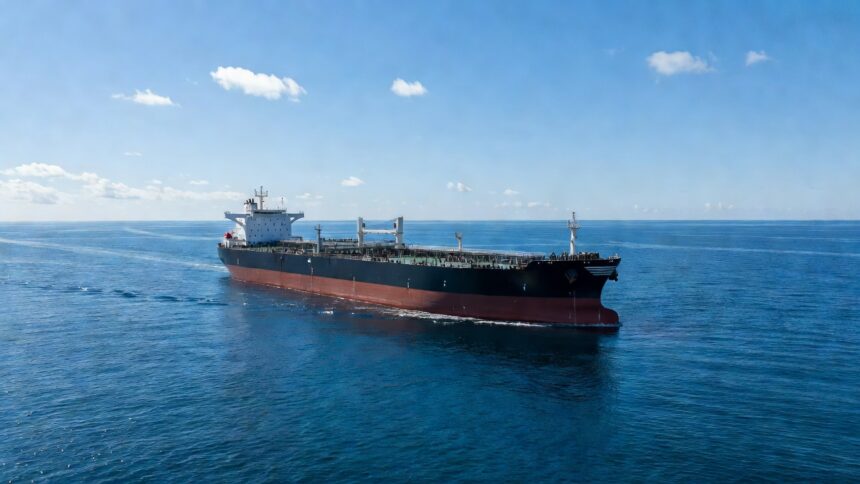


Reuters reported that Unipec, the trading arm of China’s Sinopec, purchased several African cargoes last week as freight costs eased substantially from peaks reached in October amid heightened tensions in the Middle East. Both Unipec and South Korea’s SK Energy have now chartered vessels at much lower rates to lift West African grades for December delivery to Asia. The shift illustrates how rapidly changing shipping economics can redirect global oil flows away from traditional suppliers toward more distant sources when costs align.
Ship brokerage data reviewed by Reuters showed that Unipec had provisionally fixed two Suezmax tankers to load West African crude for Asia at worldscale rates of 475 and 410 for late November and early December loadings. The company also secured a very large crude carrier on the same route for early December at worldscale 500. A major buyer of such grades, Unipec additionally acquired two cargoes of Congolese Djeno crude at discounts of around $22 a barrel to dated Brent on a free-on-board basis, according to traders familiar with West African deals.
Baltic Exchange figures cited by Reuters indicated that freight rates for VLCCs, Suezmax and Aframax tankers have dropped approximately 50 percent from their peaks last month, excluding loadings inside the Strait of Hormuz. This decline followed a period of record costs triggered by attacks on vessels and supply disruptions linked to the escalation of conflict involving Iran. The easing has improved the economics of long-haul voyages that were previously prohibitive for many Asian refiners.
Traders monitoring the market told Reuters that the delivered cost of African and Brazilian crude into China has fallen between $5 and $10 a barrel compared with levels seen a month earlier. Such reductions have allowed buyers to secure these barrels at competitive net prices even after accounting for the lengthy voyage from the Atlantic Basin. The development comes as competition for Russian crude intensifies and alternative supplies become more viable on a landed-cost basis.
Earlier Reuters reporting from October documented how freight rates for routes from the US Gulf Coast to Asia had surged to as much as $80 million per VLCC voyage, roughly ten times historical averages, before beginning to moderate. Vortexa data referenced in related coverage showed per-barrel shipping costs from Brazil to China exceeding $39 and from West Africa to China above $32 during the peak period. Those figures have since declined by about $10 a barrel on each route, opening fresh buying opportunities for independent refiners and state-backed traders alike.
The latest purchases add to growing evidence that Asian demand is diversifying beyond dominant Middle Eastern and Russian suppliers when freight differentials permit, according to analysts tracking tanker movements. Unipec’s activity in particular underscores the flexibility of China’s independent refining sector, which has increasingly sourced spot cargoes to optimise margins. Industry participants expect such patterns to persist as long as tanker availability remains ample and geopolitical risks do not reignite rate volatility.