ع


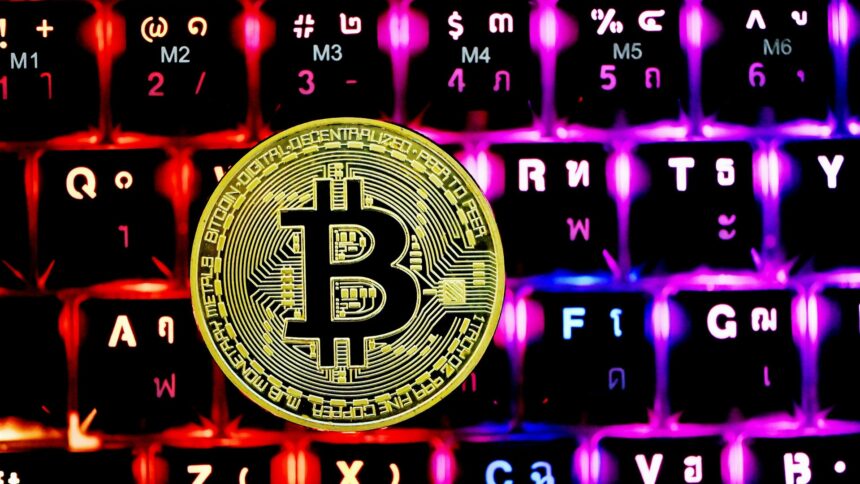


The debate over cryptocurrency and Islamic finance involves more than deciding whether a coin is halal. What the asset represents, how returns are earned and the terms of the transaction all shape the assessment.
Calling a cryptocurrency Sharia-compliant does not settle every question about using it. A ruling may cover the asset itself, while borrowing to buy it, lending it for a return or entering another contract involving it raises additional issues.
That distinction is becoming more explicit in regulatory frameworks. Malaysia’s Securities Commission revised its Islamic capital market guidelines in March 2026, requiring digital asset exchanges proposing to offer Sharia-compliant digital currencies to obtain endorsement from its Sharia Advisory Council before doing so.
Behind that requirement is a broader question for Islamic finance: how should established principles apply to assets whose ownership, transfer and economic functions are organised through software? The answer involves examining both what someone owns and what they agree to do with it.
The principles behind the assessment
Islamic finance prohibits riba, commonly translated as interest, excessive contractual uncertainty known as gharar, and gambling, or maysir. As an IMF-hosted guidance paper explains, transactions should have a real economic purpose, with risks and rewards allocated within arrangements consistent with those principles.
This does not mean that an investment must be free from the possibility of loss. Islamic finance includes arrangements in which participants share business profits and losses. The assessment concerns the nature of the activity and agreement, including the rights, obligations and risks each party takes on.
For crypto, that directs attention beyond the technology. A blockchain can record a transaction, but the record alone does not establish that its underlying purpose or financing is permissible. A transparent record of an agreement and the religious assessment of that agreement answer different questions.
It also makes a product’s name insufficient evidence. Describing a payment as a reward, profit or yield does not explain where it comes from. That requires an examination of the arrangement generating it.
What does the token actually represent?
Malaysia’s Sharia Advisory Council set out one approach in its 2020 digital asset resolutions. It recognised digital currency as property from a Sharia perspective, while distinguishing between different types.
A technology-based digital currency without an underlying asset was categorised as goods rather than currency for Sharia purposes. Digital currencies backed by gold, silver or conventional currency were treated differently, with currency-exchange requirements applying to their trading.
For digital tokens, the council’s framework examines how money raised through issuance is used and whether the rights and benefits attached to the token comply with Sharia. Additional conditions apply where activities are mixed or particular underlying assets are involved.
The practical implication is that two instruments described as crypto can require different assessments. Their technical format may be similar while their economic substance differs.
Malaysia’s published asset table identifies Bitcoin and Ethereum, among others, as Sharia-compliant within its framework. That is a specific institutional determination. The council’s resolution expressly limits its scope to assets under the Securities Commission’s jurisdiction, so it cannot be treated as universal approval of every platform or transaction involving those coins.
How the transaction changes the question
Buying and holding a token is a different arrangement from borrowing money to purchase it or transferring it to another party in exchange for a promised return. Even where an asset has passed screening, the financing or return-generating contract still needs consideration.
The same care is relevant to activities described as staking, in which assets are committed to support certain blockchain networks. The commercial terms matter alongside the technical function: how rewards arise, which fees are charged, what obligations participants accept and how penalties can affect their holdings.
Malaysia’s revised guidelines show how detailed that examination can become. The information required for digital-currency endorsement includes the protocol’s purpose, holder rights, underlying assets, consensus mechanism and any arrangements for rewards or penalties. It also asks for a Sharia pronouncement containing the adviser’s reasoning.
These requirements make the assessment more specific than checking whether a coin appears on an approved list. They connect the conclusion to an identified design, set of rights and explanation.
Why the authority and scope matter
The history of the debate also cautions against presenting one view as the position of all Islamic scholars. In its 2019 resolution on electronic currencies, the International Islamic Fiqh Academy identified unresolved questions about their classification and whether they constituted recognised value and tradable property. It called for further research.
That document did not deliver a blanket approval. Malaysia’s subsequent framework demonstrates how another institution developed determinations for assets within its own remit. Reading those positions accurately means retaining their dates, scope and reasoning.
Commercial businesses are also incorporating screening into their stated propositions. Soor, for example, describes its wallet as supporting digital assets approved by a Sharia advisory board. That is the company’s description of its approach; it does not establish a general religious ruling on cryptocurrency or extend an asset-level approval to every possible use.
The broader financial context is substantial. The Islamic Financial Services Board’s 2026 report puts Islamic financial services assets at about $4.4 trillion in 2025. Those assets principally sit in banking, sukuk, funds and insurance. The figure measures the established industry, rather than the size of a halal-crypto market.
Religious screening also leaves ordinary financial questions to be answered. A compliant structure does not guarantee a rising asset price, reliable custody or the ability to recover money after a platform failure. Regulatory permission and Sharia approval address different responsibilities.
For a crypto product, the meaningful unit of assessment is therefore the specific asset and transaction covered by a particular decision. Malaysia’s requirement for a reasoned Sharia pronouncement makes that distinction concrete: the conclusion should be traceable to what was examined, who examined it and the conditions attached.