ع




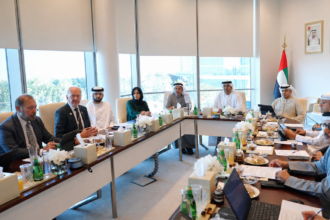
Sheikh Mohammed bin Hamad bin Faisal Al-Thani outlined a series of incentives that position the Qatar Free Zones as an attractive base for foreign investors seeking to expand into the Middle East, North Africa, Europe and Western Asia. The authority’s CEO pointed to 100 percent foreign ownership, renewable 20-year tax holidays and zero customs duties on imports and re-exports as central features that reduce operational costs for companies. According to the CEO, these measures combined with full profit repatriation allow businesses to focus on growth rather than administrative hurdles. A QFZA assessment found that the zones’ independent regulatory framework further accelerates onboarding and provides 24/7 support to investors.
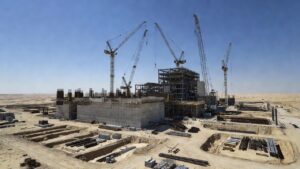
The free zones cover 32 square kilometres across sites including Umm Alhoul and Ras Bufontas, both located within 30 minutes of central Doha and offering direct links to Hamad Port and Hamad International Airport. QFZA data places sailing time to key destinations at five days and flying time at eight hours, enabling reach to more than 65 percent of the world’s population. The authority’s brochure details how these connectivity advantages support supply chain diversification for companies in target industries. Sheikh Mohammed noted that the infrastructure complements Qatar’s broader investments in digital and physical assets.
Priority sectors identified by the authority include emerging technologies, logistics and trading, food and agritech, industrial manufacturing, aerospace and defence, biomedical sciences, and maritime development. In an interview with fDi Intelligence, the CEO explained that these areas build on Qatar’s strengths in energy, transportation networks and government support for innovation. Companies such as Google Cloud, Microsoft, DHL, Volkswagen and Thales have already established operations within the zones. The CEO added that the zones complement rather than compete with free zones in other Gulf Cooperation Council states.
Qatar Free Zones Authority figures show that the legal environment operates under a common law concept entirely under QFZA jurisdiction, creating a predictable setting for international business. The authority manages its own permit regime for a skilled workforce, eliminating the need for local sponsorship in most cases. Sheikh Mohammed stressed that investors must demonstrate added value to the national economy and focus primarily on export-oriented activities. This requirement ensures alignment with Qatar’s economic diversification goals.
Regional free trade zone activity has expanded significantly, with more than 5,400 such zones worldwide generating over 90 million jobs and accounting for nearly 20 percent of global trade flows, according to a 2026 industry analysis. In the Gulf, similar incentives in the UAE have driven industrial and commercial growth, though Qatar differentiates itself through its natural gas reserves and educational infrastructure. The CEO’s comments come as QFZA continues to sign agreements with global partners to strengthen sectors like advanced manufacturing and logistics. Additional support measures include flexible office and warehouse solutions tailored to business scale.
Sheikh Mohammed participated in the World Economic Forum in Davos earlier this year, where he discussed sustainable trade and resilient connectivity in a panel moderated by a Financial Times editor. The authority has also partnered with entities like Qatar Foundation on climate action and signed memorandums with firms such as WuXi Biologics for biopharmaceutical development. These initiatives reinforce the zones’ role in fostering long-term investment. QFZA continues to promote its value proposition through targeted outreach to international stakeholders.