ع
ع



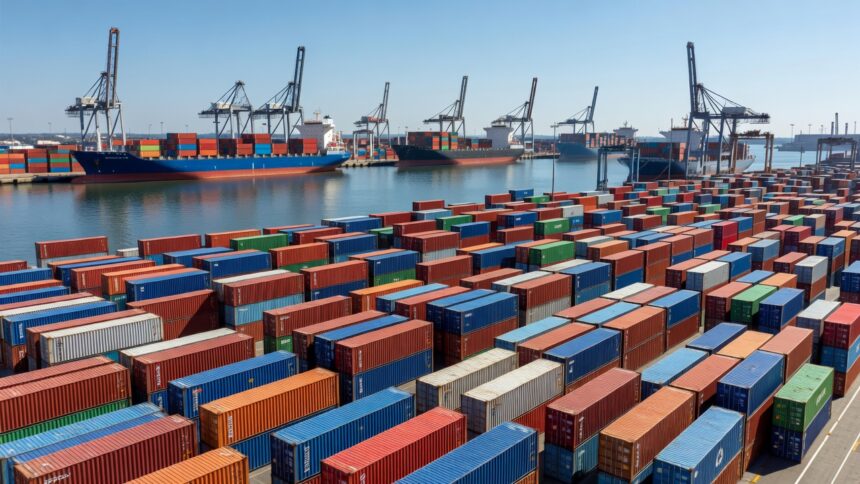


The European Commission is pressing China for tangible steps to address a widening trade imbalance that reached €359.8 billion in 2025, according to Eurostat data. EU Trade Commissioner Maroš Šefčovič met his Chinese counterpart in Brussels to launch a new consultation framework, setting an early October deadline for progress ahead of a planned trip to Beijing. The talks come as every one of the bloc’s 27 member states recorded a goods trade deficit with China last year, a first according to European Commission figures. Imports from China climbed 6.4 percent in 2025 while exports fell 6.5 percent, Eurostat reported.
Eurostat data places the 2025 deficit at €359.8 billion after the EU imported €559.4 billion in goods from China against €199.6 billion in exports. The imbalance has continued to grow in 2026, with the deficit in the first seven months reaching €234 billion, a Mercator Institute for China Studies assessment found. In July alone the gap hit €36.5 billion, equivalent to more than €1 billion a day, the institute’s analysis of Chinese customs data showed. Electrical machinery and mechanical appliances dominated both flows, comprising the top categories in imports and exports.
The record €360 billion Chinese trade surplus on the EU-China negotiating table reflects a structural shift that began after the 2020 supply-chain disruptions, a PwC review of regional trade patterns indicated. Between 2015 and 2025, EU imports from China nearly doubled while exports rose 37 percent, according to Eurostat figures. Chinese exports of electric vehicles, batteries, solar panels and steel have accelerated into the European market, prompting concerns among EU manufacturers. Šefčovič told reporters the October timeline would test whether Beijing is prepared to open restricted sectors to European firms.
Chinese customs data cited by the Mercator Institute showed the EU’s ratio of imports to exports exceeded three to one in July 2026, with €3.10 imported for every €1 exported. The institute noted that China is selling more to Europe while buying less, a trend that has intensified since United States tariffs redirected Chinese goods. EU officials have highlighted barriers facing European companies in sectors ranging from pharmaceuticals to automobiles, the Commission stated. Talks will also cover Chinese restrictions on exports of critical minerals and rare earths.
A Bruegel think-tank tracker of global trade flows found the EU’s overall goods surplus with the rest of the world has helped offset part of the China deficit, though the bilateral gap remains a policy priority. In the first half of 2026, imports of electrical equipment from China rose €6.2 billion compared with the same period a year earlier, Eurostat figures show. Machinery and mechanical parts imports increased by €4.1 billion over the same interval. These categories accounted for nearly half of all EU imports from China in the period.
Šefčovič has described the current imbalance as unsustainable and called for reciprocal market access so European firms face conditions in China similar to those Chinese companies encounter in the EU, a Commission spokesperson said. The new joint monitoring mechanism agreed in Brussels aims to track trade flows more closely and identify specific barriers, according to the joint statement issued after the meeting. EU leaders are expected to review outcomes at their October summit, adding political weight to the deadline. The consultations mark the first formal EU-China trade statement since 2019.