ع
ع






The Abu Dhabi-headquartered company is expanding as financial institutions consider not just what AI can decide, but where it runs and how decisions are governed.
Synapse Analytics’ $13 million Series A is a funding story about a specific part of banking automation: the point at which information becomes a decision to accept a customer, approve credit or flag a transaction for further review.
The round, announced on 14 September, was led by Partech with participation from Algebra Ventures and Silicon Badia. It brings the company’s disclosed funding to $17 million. Synapse says the money will support hiring, product development and international expansion.
Its proposition is that financial institutions can use more sophisticated automated decision tools while retaining the technology and data within infrastructure they control. The distinction is timely. Regulators and financial-sector researchers are examining AI’s role in critical processes, where a faster answer does not, by itself, establish that the answer is appropriate or explainable.
Where the decision is made
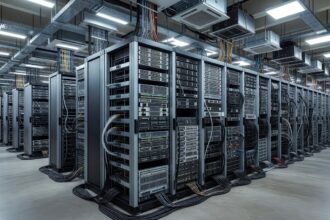
The investment announcement describes deployment options including a bank’s own premises, private or sovereign cloud environments, and isolated systems. It also says credit and risk teams can test policy changes against historical data before putting them into production. These are stated capabilities of the platform, rather than an independent assessment of every deployment.
That architecture addresses a different question from whether an AI model is accurate. One concerns control over the environment in which information is processed. The other concerns the quality of the decision produced. A bank can retain its data internally and still need to examine how a model was trained, whether it behaves consistently and who can approve changes.
The announcement does not disclose a valuation or transaction terms. Nor does the amount raised measure the volume of credit that banks will approve using the platform. Venture funding supports the supplier’s development; lending decisions and the associated financial exposures remain a separate activity.
Open banking adds information, not automatic certainty
Synapse, led by co-founder and CEO Ahmed Abaza, has already linked its credit-decisioning work with the region’s open banking infrastructure. In a partnership announced with Lean Technologies in 2025, it outlined plans to combine financial-account information with credit-bureau data and cash-flow analysis for lenders in Saudi Arabia, the UAE and the wider region.
The significance is the combination of different evidence about a borrower. A credit-bureau record and the pattern of money entering and leaving an account describe related but distinct aspects of financial activity. Bringing them together can change the information available to an underwriting team. It does not eliminate the need to decide which information is relevant or how it should be interpreted.
The partnership statement describes intended uses, including testing risk strategies and combining models with existing policies. It does not establish a universal improvement in lending outcomes. A model used for a particular borrower segment or product cannot be assumed to deliver the same result in another market simply because the underlying software is shared.
Synapse’s company profile reports more than 50 clients served, over 10 million applications processed and more than $200 million in loans facilitated. Those are company-wide figures. They should not be read as UAE-only activity or as the company’s own loan book. Applications processed also do not necessarily correspond to distinct borrowers.
Researchers distinguish explanation from assurance
A Financial Stability Institute paper published by the Bank for International Settlements in September 2025 examines the difficulty of explaining complex AI models. It notes that techniques intended to clarify a model’s behaviour can themselves be inaccurate or unstable. An explanation presented in ordinary language is therefore not automatically a reliable account of how an output was reached.
The paper links the issue to model development, documentation, validation, monitoring and independent review. It also discusses the trade-off between performance and explainability, rather than assuming that one simple rule will suit every application. These are analytical observations from the authors, not a certification of Synapse or any other supplier.
For lending, the distinction is practical. Reproducing the data and policy version used for a decision is different from producing a plausible description after the event. Historical testing can help examine how a proposed policy would have behaved, but past data alone cannot establish its performance under every future economic condition.
This is why the ability to change policies needs to be considered alongside the controls surrounding those changes. Speed is useful only within a process that makes responsibility clear. The authority to propose an adjustment, approve it and monitor its effect may sit with different people, even when all three steps appear within one software environment.
The institution remains the point of accountability
The Financial Stability Board’s assessment of AI in finance identifies wider vulnerabilities including third-party dependencies, cyber risks, model risk and data quality. It also considers the possibility that similar models and information sources could make financial institutions behave in more correlated ways.
These concerns extend beyond the location of a server. A locally deployed model can still depend on a supplier for maintenance, updates and expertise. Conversely, outsourcing technology does not necessarily mean outsourcing the institution’s responsibility for the financial service. Infrastructure choices and governance choices need to be evaluated together.
Synapse’s new capital places it among the companies trying to turn those requirements into a product that banks can operate. The next evidence will come from how deployments are governed and how their results are reported across different institutions. The round establishes additional resources for that work; it does not settle the more demanding question of how automated decisions perform over a full lending cycle.