ع
ع





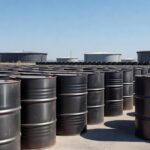
During a meeting on economic issues, Russian President Vladimir Putin outlined preliminary estimates for the federal budget, stating that Russia projects 2% budget deficit even under conservative oil price estimate. The president said the 2027 shortfall would come in at around 2 percent of gross domestic product based on a very conservative oil price assumption of about $50 per barrel. “It may even look super conservative, but it is reliable, and the National Welfare Fund will also grow,” Putin said. He added that rising oil prices on global markets would lead to increased oil and gas revenues in coming months, enabling the government to replenish the National Wealth Fund that serves as a state financial buffer.
The Russian economy is forecast to grow by up to 1 percent in 2026, consistent with initial projections, according to Putin. The president highlighted that economic performance has aligned with expectations, supported by strong domestic activity. In August the federal budget was executed with a surplus of 606 billion rubles, largely due to non-oil and gas revenues that rose more than 18 percent in the first eight months of the year.
Retail sales increased by 5.4 percent over seven months while real wages grew 6.5 percent in the first half of the year, Putin reported. Unemployment has remained at a historic low of 2.3 percent, further stimulating consumer demand across the country. These positive trends come as the government prepares the socio-economic forecast for 2027-2029 to serve as the foundation for the next three-year budget.
Izvestia reported that analysts expect the current year’s deficit to approach 2.5 to 3 percent of GDP, a development they view as non-threatening to financial stability given the country’s relatively small public debt. The National Wealth Fund has acted as a key cushion, with its assets drawn down since the start of the special military operation in 2022. Putin stressed that the conservative oil price assumption would ensure the fund continues to grow under the 2027 plan.
A Bank of Finland Institute for Emerging Economies forecast from earlier this year projected that Russia’s public sector deficit would narrow to 1.6 percent of GDP in 2026 under the approved budget law that assumed an oil price of $59 per barrel. The institute noted that oil and gas revenues are expected to rise modestly if global prices hold above conservative estimates. Putin’s latest remarks align with ongoing efforts to balance the budget while investing in domestic priorities.
Putin pointed to the growing contribution of the domestic market in generating budget revenues independent of the oil and gas situation. The government is completing work on a socio-economic development forecast for 2027 through 2029 that will form the basis for the budget. This process incorporates conservative assumptions to maintain fiscal prudence.