ع
ع





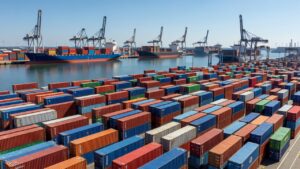
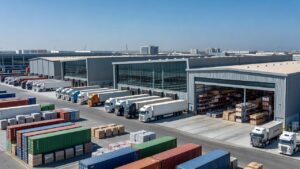
The Qatar News Agency reported that Hamad Port ensured the efficient and steady flow of essential goods into the country during the three-month period, a volume that underscores the robustness of national food security arrangements built on extended planning and targeted infrastructure spending. Hamad Port functions as a central element in Qatar’s broader logistics system, addressing local needs through high operational standards, modern equipment and wide-ranging sea links that advance economic objectives. Captain Abdulaziz Nasser Al Yafei, executive vice president of operations at Mwani Qatar, stated that the port acts as a primary entry point for trade and supply chains with connections to more than 100 global maritime destinations, directly backing food security alongside export activities.
Mwani Qatar maintains specialised terminals at the port dedicated to the storage, processing and packaging of food items, which broadens its mandate from mere transshipment to full integration within the national food supply chain from initial unloading to final preparation for market release. These installations form a vital segment of Qatar’s food infrastructure and have supported consistent supply stability even amid external pressures. The port operator has emphasised how such capabilities help maintain market equilibrium through reliable import channels and domestic distribution networks.
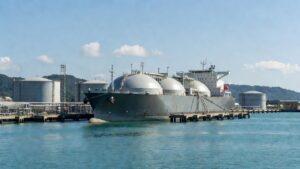
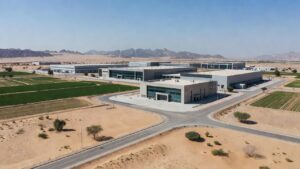
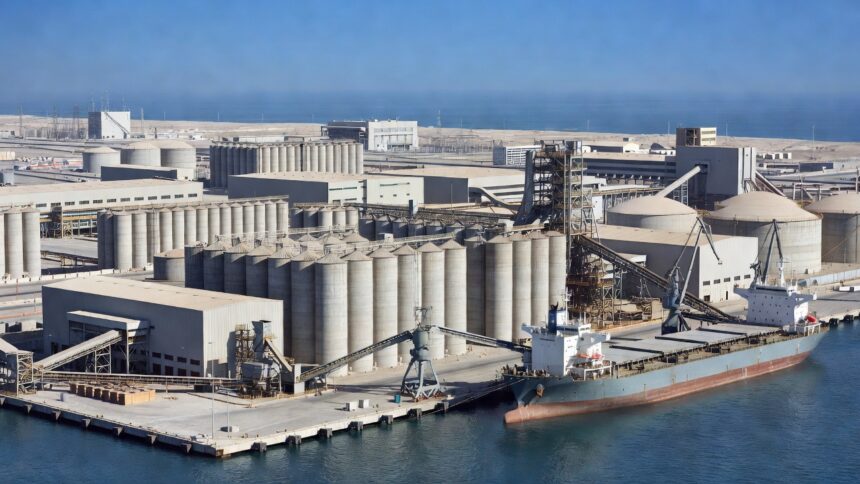
The Public Works Authority indicated that the Food Security Facilities and Warehouses Project at Hamad Port achieved 98 percent completion by June 2026, marking substantial advancement in one of the state’s primary initiatives tied to the Qatar National Food Security Strategy and National Vision 2030. The development occupies more than 530,000 square metres and delivers an overall storage capacity of 300,000 metric tons, encompassing 51 silos along with dedicated processing units for rice, sugar and edible oils that meet top international benchmarks. Project officials noted that the terminal operates as a self-contained facility inside Hamad Port, featuring a 575-metre berth with 12.5 metres of depth to accommodate vessels carrying specialised food cargoes.
According to the Public Works Authority, the complex includes a rice mill, oil refinery, multiple warehouses for storage and packaging, oil tanks, and integrated systems for handling, transport and reloading in addition to administrative offices, power substations, central cooling plants and maintenance areas. These elements ensure sustainable performance while aligning with broader efforts to reduce reliance on external sources. The Ministry of Municipality has coordinated the project as secretariat for the national food security committee, focusing on reserve enhancement and supply chain resilience.
Ministry of Commerce and Industry documentation establishes minimum stockpile thresholds at the terminal that surpass basic national requirements, listing 32,000 metric tons of wheat, 36,500 tons of rice, 10,000 tons each of food oils and sugar for human consumption along with 53,605 tons of animal feed commodities. The National Food Security Strategy 2030, administered by the Ministry of Municipality, sets targets for holding 11 essential commodities in quantities adequate for two to eight months of national consumption while expanding Hamad Port’s role as a regional trade and manufacturing centre via private-sector collaborations. Earlier assessments from the Ministry of Transport highlighted how the facilities can provision three million people for two years per commodity, supporting both local needs and potential re-export.
The Ministry of Transport announced in 2017 that a QR1.6 billion contract had been awarded to AlJaber Engineering for the design and construction of these facilities on 53 hectares, drawing on expertise from international partners including Bühler, BIA and C.M. Bernardini to incorporate best global practices in storage and processing technology. This investment followed the 2017 blockade that prompted diversification of import routes and accelerated domestic production in sectors such as dairy, according to academic reviews of Qatar’s socio-ecological responses. Mwani Qatar has since assumed operational responsibility, ensuring the terminal contributes to long-term economic diversification goals under Qatar National Vision 2030.