ع
ع



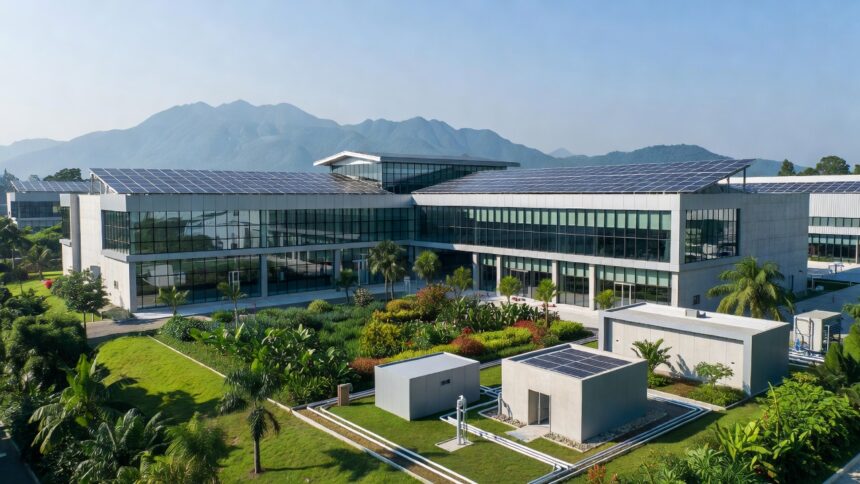


The Ministry of Industry and Trade has detailed plans to gradually build a comprehensive national materials industry capable of researching, designing and producing advanced materials by 2030 as an initial step toward the longer-term 2045 goal. This initiative forms part of broader efforts to reduce reliance on imported materials and technologies in key sectors such as electronics, renewable energy and defense. By mastering production of critical inputs, Vietnam seeks to insulate its economy from global supply chain disruptions, the ministry’s document indicated.
Vietnam’s push comes as the country accelerates its rare earths strategy, which a Vietnam Net report published in January 2026 described as a shift toward greater strategic autonomy in critical minerals. The Southeast Asian nation holds significant rare earth deposits, positioning it to capture more value from processing and manufacturing rather than raw exports. Officials have emphasized the need to ban unprocessed ore exports while developing domestic refining capabilities, according to draft amendments under discussion.
Strategic autonomy has emerged as a central pillar in Vietnam’s development vision for a high-income economy by 2045, an analysis published by Sai Gon Giai Phong in April 2026 found. The materials industry plan aligns with this by promoting localization rates and mastery of core technologies, reducing vulnerabilities in strategic sectors. Government assessments have highlighted how dependence on foreign suppliers for semiconductors and battery materials could hinder long-term growth amid geopolitical tensions.
The strategy includes fostering international partnerships to acquire technology and investment while maintaining control over domestic resources, a Fulcrum analysis from March 2026 noted in relation to Vietnam’s approach across energy and infrastructure. Such collaborations are expected to support the development of specialized materials for high-tech applications without compromising national interests. The ministry has called for increased state funding for geological surveys and research and development in the sector.
Industry experts have pointed to recent investments in steel and related materials as evidence of Vietnam’s progress, with one major producer expanding capacity through a USD 3.34 billion plant as reported by The Investor in May 2025. These developments in adjacent sectors are seen as complementary to the new materials focus. The overall plan aims to create a self-reliant ecosystem that supports Vietnam’s ambitions in electric vehicles, electronics manufacturing and green energy.
Implementation will require coordination across multiple government agencies to streamline regulations and attract foreign direct investment into compliant processing facilities, according to the national strategy framework. Environmental safeguards have been integrated into the planning to ensure sustainable extraction and production practices. The government has classified certain minerals as strategic resources, centralizing authority to better manage their development.