ع
ع


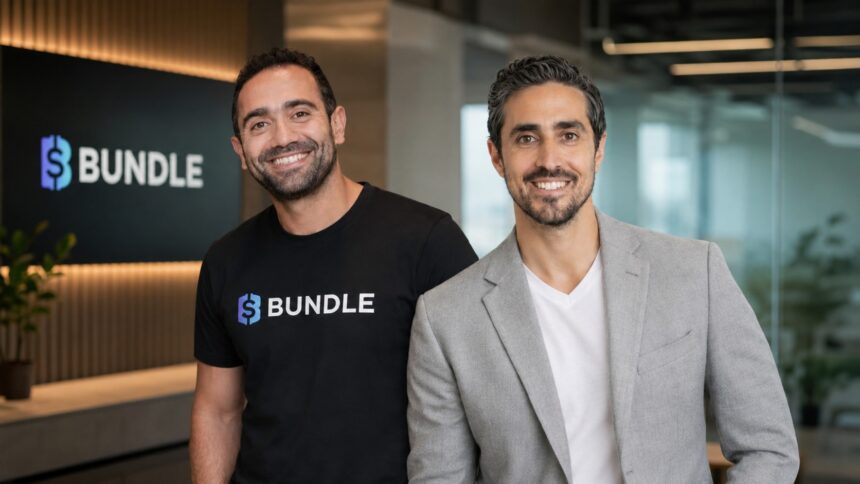


Bader Al Kalooti’s rewards startup is backed by Joe Lubin’s Ethereal Ventures and Abu Dhabi’s ADQ-backed Further Ventures, and its first market is not the Gulf but Southeast Asia.
Bundle, a Dubai startup that lets businesses pool their marketing budgets into shared prize funds, emerged from stealth on 30 July with $5.5 million in pre-seed funding and a launch plan that says as much about the Gulf’s venture economy as it does about loyalty marketing. The round was co-led by Ethereal Ventures, the firm founded by Ethereum co-founder Joe Lubin, and Further Ventures, the Abu Dhabi venture builder backed by sovereign investor ADQ, with participation from Nascent, GSR, Scenius Capital, US digital asset bank Anchorage Digital and regional fund Nuwa Capital. The proceeds will fund product development, regulatory coverage and strategic partnerships, and an initial rollout across Singapore, Vietnam and the Philippines, where more than 50 founding brands have already signed up.
An Operator and a Banker
The founding team pairs the two halves of the problem. Bader Al Kalooti led operations, marketing and growth for Binance across the Middle East and North Africa, with earlier career stops at Amazon and Citibank, and describes his exchange years as a journey helping grow Binance across MENA, South Asia and Turkey. In the post announcing the company, he distilled that period into a single conviction: that “crypto’s next phase will be driven by businesses using Web3 rails to improve efficiency without making crypto the product,” and that the fastest path to mainstream adoption “is to solve real problems for Web2 brands that already serve billions of users.”
His co-founder, Mostafa Wanas, spent 12 years in investment banking advising consumer and technology companies through M&A transactions and IPOs, and reached the same diagnosis from the opposite seat. Consumer growth, he wrote in his own launch post, depends on a company’s ability to win attention, which the largest players capture with everything from deep discounts and endless cashback to multimillion-dollar prize campaigns, while “most smaller businesses cannot compete at that level, regardless of how good their products are.” Al Kalooti told Arabian Business the same lesson from inside the giants: his years at Amazon and Binance showed him how far the incentive budgets of the world’s largest companies sit beyond the reach of ordinary businesses.
Bundle is the answer the two built. Consumers earn tickets through purchases, referrals and other qualifying actions; the tickets enter prize draws funded collectively by participating brands; blockchain handles ticket issuance and winner selection, and stablecoins move the payouts. The crypto is plumbing, not product.
What the Cap Table Says
Read the investor list as a map. On one side sits the crypto establishment: Lubin’s fund, a federally chartered digital asset bank, trading firm GSR. On the other sits Gulf institutional money: Further Ventures, launched in 2022 with a $200 million fund anchored by ADQ to co-create fintech and digital asset ventures, and Nuwa Capital, one of the region’s active early-stage firms. That blend is becoming a UAE signature. MAGNiTT data show MENA startups raised a record $3.8 billion in 2025, with 91 percent of it landing in Saudi Arabia and the UAE, and Dubai has spent four years building a dedicated regulatory perimeter for digital assets through VARA, established in 2022. Bundle fits the pattern precisely: conceived in Dubai, capitalised by global crypto investors alongside Gulf sovereign-linked capital, and structured from day one for markets far beyond the region.
Why Asia Comes First
Because the striking detail is the launch geography. Bundle’s first customers are 6,000 kilometres from its head office. Southeast Asia’s digital economy is on track to surpass $300 billion in gross merchandise value in 2025, with revenues of $135 billion across a population of more than 680 million, according to the tenth e-Conomy SEA report by Google, Temasek and Bain & Company. For a product that lives on high-frequency consumer transactions and dense small-business ecosystems, the choice follows the market. The announcement makes no mention of a MENA rollout, and there is a reading of that silence the region should sit with: the Gulf now produces the founders, the regulation and the capital for consumer fintech, and still watches the first revenue land elsewhere.
A Pre-Seed, Not a Proof
The honest caveat is that everything above is potential rather than record. The company is months old, and its pilot, run across five markets, distributed $100,000 to just over 1,100 winners with a top prize of $50,000; the conversion uplifts of up to four times that Bundle reports from A/B testing are its own figures from that pilot, not audited results at scale. Al Kalooti concedes the point himself: “The path will not be easy. It requires changing behaviour, educating the market and navigating regulation across jurisdictions.”
What the round settles is narrower, and still meaningful. When a Binance regional chief and a career deal adviser build their next company, they build it in Dubai. When Ethereum’s co-founder and Abu Dhabi’s venture builder co-lead a pre-seed, they co-lead it into a UAE cap table. The customers, for now, are in Asia. The company is not.