ع
ع



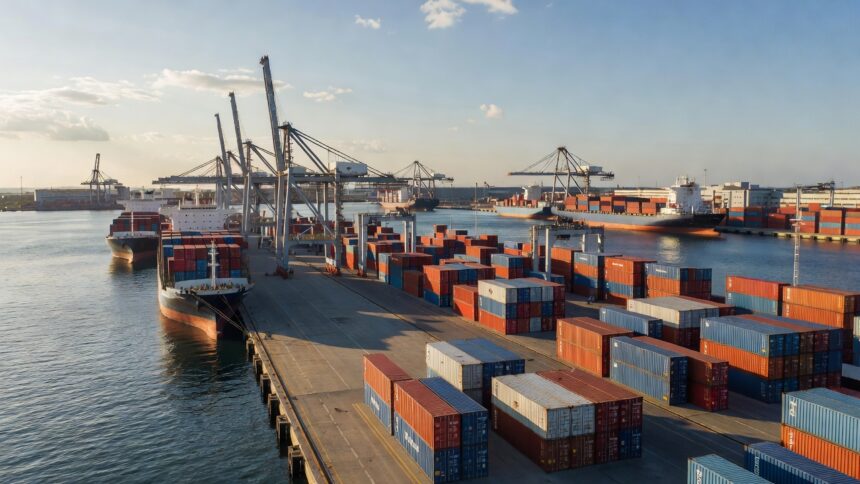


The World Trade Organization’s latest assessment detailed how global goods trade proved resilient in the first quarter of 2026, resisting several downward pressures that had weighed on activity in prior periods. According to the WTO, merchandise trade volumes held largely stable between January and March, supported by steady demand in key markets and improved supply chain operations. The report, issued in late July, forms part of the organization’s regular monitoring of worldwide commercial flows and provides an early gauge of conditions following volatility in late 2025.
WTO data places Asian export performance as a central factor in the overall stability, particularly in manufactured goods and electronics shipments that offset softer results elsewhere. The organization’s figures show European trade facing continued headwinds from elevated energy costs and subdued industrial output while North American import demand remained firmer on the back of consumer spending. A separate breakdown in the assessment highlighted how diversified sourcing strategies helped cushion the impact of regional disruptions across multiple supply networks.
International Monetary Fund projections released in April 2026 align with the WTO’s early-year snapshot, forecasting full-year global trade expansion around 3 percent after the first-quarter resilience. The IMF’s world economic outlook noted that merchandise trade has continued to recover from pandemic-era lows, with cumulative growth since 2022 now exceeding pre-crisis benchmarks according to the fund’s statistics. This context underscores the role of trade as a supporting element in broader economic activity tracked by both institutions.
The WTO assessment also incorporated preliminary services trade indicators, although the primary focus remained on goods volumes that constitute the bulk of measured international commerce. According to the organization, preliminary estimates pointed to a modest sequential improvement from the fourth quarter of 2025, even as risks from potential new trade barriers persisted. Trade officials cited in the report stressed that maintaining open multilateral channels would be essential to preserving the observed resilience through the remainder of the year.
United Nations Conference on Trade and Development statistics provide additional perspective, showing that developing economies contributed disproportionately to the first-quarter stability recorded by the WTO. UNCTAD data places their share of global merchandise exports at levels consistent with trends established after the 2020 contraction, reflecting sustained participation in value chains. The combined metrics from these bodies illustrate how varied regional contributions can support headline resilience even when individual markets experience uneven conditions.
Further historical comparisons contained in the WTO document indicate that the first-quarter outcome sits close to average growth rates observed in the decade preceding the pandemic, once adjusted for inflation and seasonal factors. The organization has tracked these quarterly shifts since the early 2000s, creating a consistent reference series that allows current performance to be placed in longer perspective. Additional context from central bank reports in major economies echoed the WTO finding that trade flows have so far avoided the sharper slowdowns anticipated by some forecasters at the start of the year.