ع
ع

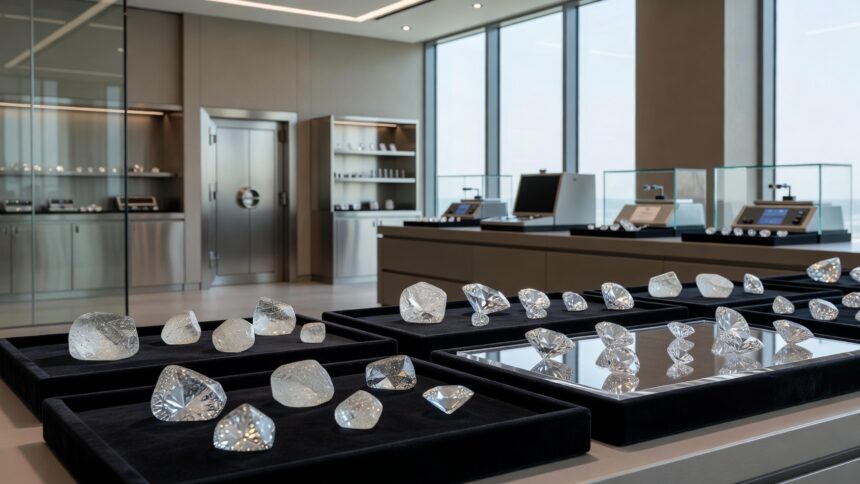


The Qatar Free Zones Authority announced the establishment of the Qatar Diamond Exchange to serve as a comprehensive hub for the trade of rough and polished diamonds as well as precious stones. Hosted inside the Ras Bufontas Free Zone, the platform unites trading activities, membership management, secure vaulting, certification processes and supporting industry services into one regulated setting, the authority said in a statement. This development creates a dedicated gateway for global participants and aligns with Qatar’s broader objectives for non-hydrocarbon growth. The initiative builds upon the country’s established free zone incentives designed to attract foreign direct investment.
Qatar joined the Kimberley Process Certification Scheme as a full participant in 2021, according to the authority, which reinforced the country’s dedication to responsible sourcing of conflict-free diamonds. Law No 15 of 2025 subsequently designated the free zones authority as the official competent body and restricted all rough diamond imports and exports to designated free zone locations. The new exchange supplies the practical mechanism through which authorized members can conduct compliant transactions, storage and related operations within this framework. This legal structure aims to maintain the highest levels of transparency throughout the supply chain.
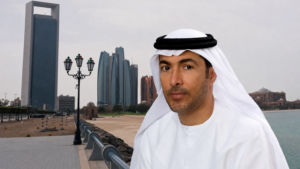
Sheikh Mohammed bin Hamad bin Faisal al-Thani, who serves as chief executive of the authority and chairman of the Qatar Diamond Exchange, highlighted the project’s role in sector development. “The Qatar Diamond Exchange represents an important step in Qatar’s efforts to further diversify its economy and strengthen its position as a trusted participant in global diamond trade,” al-Thani said. “Building on Qatar’s participation in the Kimberley Process since 2021, we have established the regulatory and institutional foundations needed to support the growth of a new strategic sector for the state.” The chairman added that the exchange assembles the complete diamond and precious stones value chain under a unified regulated system that spans trading, storage, vaulting, auctions, tenders and industry support services.
Membership stands open to enterprises involved in diamond trading, manufacturing, cutting and polishing in addition to affiliated service providers and relevant industry associations, the authority reported. Qualifying members obtain trading licenses along with on-site assortment capabilities, independent valuation services, vault storage and tailored insurance products inside a free zone environment that grants 100 percent foreign ownership and zero corporate tax rates for eligible companies. Organizers plan a series of curated tenders for both rough and polished diamonds that will facilitate connections between producers based in Africa and Asia and buyers located across Europe and the Gulf region. The authority invited applications for membership to build the community of participants.
A Fortune Business Insights report projected the global diamond market to rise from 106.76 billion dollars in 2026 to 153.1 billion dollars by 2034 at a compound annual growth rate of 4.6 percent. The General Secretariat of the Council of Ministers has described the economic development component of Qatar National Vision 2030 as focused on attaining sustainable prosperity via prudent resource stewardship, economic diversification and strengthened private sector participation. The Qatar Diamond Exchange received unanimous election to the World Diamond Council in May as a full member, an industry group said, marking another step toward embedding Qatar in global governance structures for the sector. These projections reflect rising demand for ethically sourced gems amid expanding jewelry and industrial uses worldwide.
The authority has scheduled the second Doha International Diamond and Gem Conference for the first half of 2026 to complement the exchange launch and promote knowledge sharing among professionals. Such events and infrastructure investments are expected to draw additional participants to the local ecosystem. The combined measures position the exchange as a key element in Qatar’s strategy to expand its footprint in high-value international commerce.