ع
ع



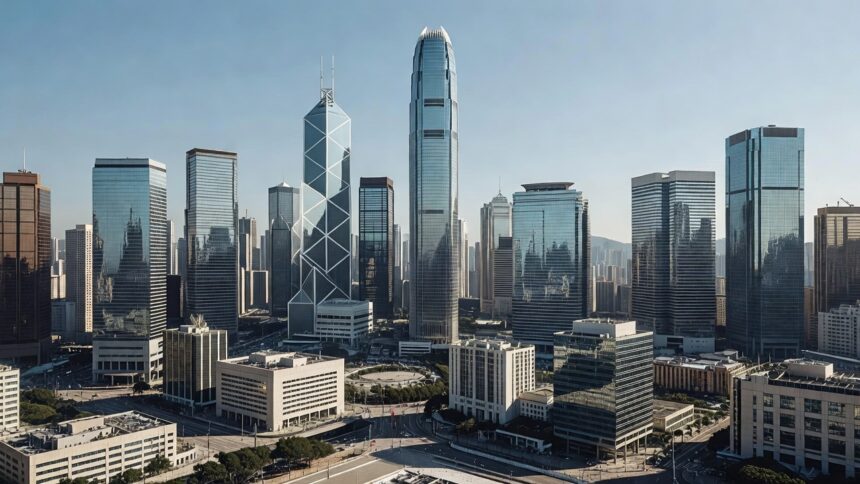


Shein secured approval from Chinese regulators for its Hong Kong initial public offering on July 10, 2026, clearing the path for a potential launch as early as September after previous attempts to list in New York and London collapsed. The fast-fashion retailer could achieve a valuation of up to $50 billion in the Hong Kong market, a figure that reflects some moderation from its $66 billion valuation in a 2023 private funding round according to Reuters reporting. A Research Nester assessment placed the global fast-fashion sector at approximately $180.6 billion in 2026 with projections for continued expansion driven by digital-native consumers in emerging markets.
Sky Xu, who founded the company in Nanjing in 2012 originally as Sheinside, has maintained an exceptionally low public profile even as Shein grew into one of the world’s largest apparel retailers with $32.5 billion in estimated revenue for 2023 per Business of Apps data. Xu has avoided all interviews and maintains no visible online presence, delegating external relations to executives such as former banker Donald Tang whom he brought in during the New York listing effort to handle investor and political outreach. The lack of transparency around leadership has previously fueled regulatory and political concerns in the United States and Britain that complicated those earlier IPO attempts.
Born in 1984 in Zibo in China’s Shandong province, Xu grew up with early exposure to the garment industry through his mother’s work in a factory according to Chinese media reports cited in the Reuters account. He initially used Chris as an English name in Shein’s 2022 sustainability report before switching to Sky, drawn from a character in his given name Xu Yangtian. An industry source familiar with Xu for years described him as patient, modest and pragmatic while noting his status as a prolific collector of antique coins and his continued deep involvement in daily operations despite the company’s scale.
Xu made the strategic decision in 2015 to rebrand from Sheinside to the shorter Shein despite an already large user base, a move the source said demonstrated his willingness to accept short-term disruption for long-term gain. He hesitated for years on pursuing an IPO, believing the company should avoid reliance on external capital to compete with rivals such as Pinduoduo’s Temu platform. Shein relocated its headquarters from China to Singapore in 2022 in an effort to distance itself from Beijing while keeping the bulk of its suppliers and warehouses concentrated in Chinese garment factories around Guangzhou.
The founder made a rare public appearance in February 2026 when he addressed policymakers at the Guangdong High-Quality Development Conference on Shein’s investments in its supply chain. Shein has stated its commitment to greater transparency yet Xu does not appear on the corporate website and the governance section provides no details on ownership or leadership. Xu co-founded the company alongside Maggie Gu, now general manager, Molly Miao, currently chief marketing officer, and Tony Ren who serves as chief supply chain officer.
A second source close to Xu suggested the low profile may represent a deliberate strategy to reduce the risk of a regulatory crackdown similar to the one that halted Jack Ma’s Ant Group $37 billion IPO in November 2020. Such caution has not entirely shielded Shein from scrutiny over its opaque structure and supply-chain practices. Politicians and campaigners in Western markets have raised questions that contributed to the derailment of the company’s prior listing efforts in the United States and Britain.
Shein’s Hong Kong IPO approval marks a significant milestone for a business that has expanded rapidly in a competitive fast-fashion landscape where industry figures project leaders such as Shein could reach $55 billion in revenue by the end of 2026 according to RetailBoss analysis. The listing process will require greater disclosure that could compel Xu to engage more directly with investors and the public than at any previous point in the company’s history. Regulators in Hong Kong will now review the full filing as the company prepares for what Reuters described as its most high-profile market test to date.