ع




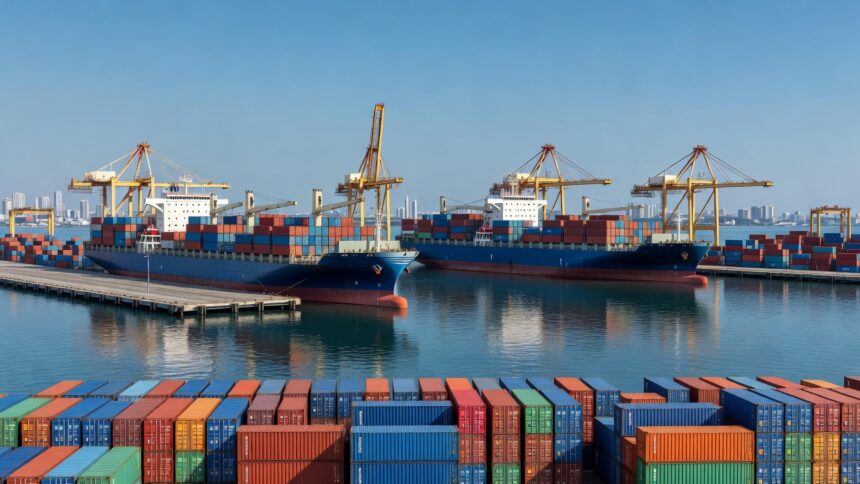


Reuters reported from multiple Asian capitals on Nov. 4 that the Democratic takeover of Congress following the previous day’s vote represents a stinging rebuke to President Donald Trump’s policies on tariffs and the conflict in Iran, which voters blame for driving persistent inflation. A study by researchers at the Federal Reserve Bank of New York found that levies introduced last year drove consumer goods inflation by an estimated 2.9 percentage points as of February, according to a subsequent Washington Post report. That backdrop has left trading partners assessing whether they can now slow-walk investment pledges made to head off further duties while testing the limits of Washington’s negotiating position.
The news service said the outcome may hand China a perceived upper hand in current trade talks and encourage nations such as South Korea and India to reconsider the pace of commitments totaling hundreds of billions of dollars. Executives surveyed by Reuters indicated that the Democratic gains are unlikely to ease near-term cost and tariff pressures because the administration has pursued much of its agenda through executive authorities that do not require congressional approval. Andrew Adair, trade policy adviser for North America at German machinery association VDMA, told the agency that Congress could attempt to roll back tariffs but such legislation would face major political hurdles and potential veto.
For India, still finalizing elements of a bilateral trade framework agreed in February that lowered a punitive tariff on most Indian goods to 18 percent from 50 percent, the results offer incentive for a wait-and-see approach, Reuters reported. India’s trade minister said earlier this month that the first phase of the deal was in final drafting stages but would proceed only if New Delhi secured advantages over competing exporters. Anup Wadhawan, a former trade secretary to India’s federal government, told Reuters, “After the US midterm losses, President Donald Trump’s capacity to impose arbitrary tariffs will certainly face a challenge. At some point he needs the Congress’s approval for trade actions and, to that extent, he’s weakened.”
China could look to exploit the political dynamics during negotiations, the Reuters dispatch added, although Chim Lee, an industrial policy analyst at the Economist Intelligence Unit in Beijing, assessed that broad US-China economic relations would likely maintain a state of fragile stability. Tommy Xie, head of Asia macro research at OCBC Bank, told the agency that the White House may now face greater pressure to avoid a return to trade wars that have raised costs for American consumers. Data compiled by The Guardian showed US inflation climbing back above 3 percent in September 2025 after earlier declines before the Iran war helped push it to 4.2 percent in May 2026, with average gasoline prices reaching $4.32 per gallon by mid-October.
Reuters noted uncertainty over whether the midterm losses will constrain Trump or make him more unpredictable in his remaining time in office, suggesting partners must tread carefully to avoid retaliation. European officials may benefit from added predictability on issues including digital services taxes on US tech firms and a 3 billion euro loan to Airbus from the European Investment Bank that has tested the transatlantic trade truce in place since 2025. A separate Reuters report indicated that while analysts expect pressure against renewed trade wars, the persistence of executive powers means firms anticipate little immediate material relief from existing import tariffs.
The South China Morning Post reported on Nov. 3 that Asian exporters hoping a hostile Congress would undo trade disruptions are likely to be disappointed because presidents retain substantial authority on tariffs irrespective of legislative balance. Biman Mukherji, writing for the newspaper, cited analysts who recalled that midterm results had limited practical effect on tariff implementation during Trump’s first term. The combined assessments underscore that any additional leverage for partners will require careful navigation of both congressional and executive channels in Washington.