ع


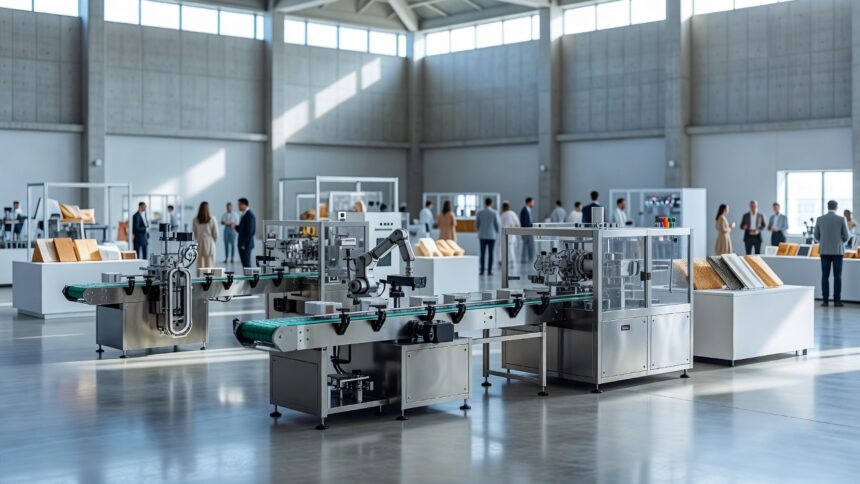


The 12th edition of the exhibition ran from November 3 to 5 at the Dubai World Trade Centre alongside ISM Middle East, GulfHost and Private Label Middle East, spanning 21 halls in total and covering everything from ingredients and processing to packaging, automation and cold chain logistics. Organisers positioned the gathering as a direct response to growing pressures on global supply chains, with participants examining technologies that improve efficiency, reduce waste and support localised production. A post-event summary from Global Supply Chain ME noted that the focus remained on practical applications delivering measurable gains in productivity and resource consumption while maintaining product quality and safety standards.
According to a WAM report, Gulfood Manufacturing 2026 showcases advanced technologies to enhance food security under the theme Powering Food Security Through Manufacturing Innovation. The event aligns with the UAE National Food Security Strategy 2051, which seeks to build industrial capacity and reduce dependence on imports through targeted domestic manufacturing growth. Organisers indicated the exhibition connects technology providers, investors and policymakers to accelerate progress toward these national objectives.
Exhibitors demonstrated solutions including laser-powered PET bottle blowing systems that shorten start-up times and improve consistency with recycled materials, as well as high-speed packaging equipment capable of handling more than 100,000 units per hour. Sustainable alternatives such as aluminium-free cartons that lower carbon footprints by up to 25 percent and specialty fats that cut production costs by as much as 70 percent while reducing emissions featured prominently across multiple stands. Microwave-based inspection tools for detecting foreign bodies in pumpable foods and AI platforms for operational excellence also drew attention from manufacturers seeking to strengthen both safety and efficiency.
The exhibition included the FoodTech Summit with sessions addressing supply chain resilience, the integration of local ingredients and the application of artificial intelligence in manufacturing, according to the published agenda. Industry Excellence Awards presented on the second day recognised achievements in categories ranging from food safety to smart manufacturing, with GEA Middle East receiving honours for food safety innovation and Givaudan for AI applications. These elements reinforced the event’s role as a benchmark for global food production standards.
UAE authorities aim to increase the food and beverage sector’s contribution to GDP from AED 30 billion to AED 40 billion by 2028 while achieving AED 2 billion in annual import substitution and supporting up to 200 factories, figures cited in event-related coverage. The 2024 edition of Gulfood Manufacturing attracted 55,374 visitors and represented a 30 percent increase in show size over prior years, establishing a baseline for continued expansion. This year’s participation from first-time countries including the Philippines, Argentina and Slovakia reflects broadening international interest in Middle East manufacturing opportunities.
Discussions throughout the event highlighted the importance of collaboration on traceability, predictive planning and energy-efficient refrigeration to build more resilient food ecosystems, according to multiple exhibitor briefings. Companies such as Tetra Pak, Bühler Group, Krones and Cargill used the platform to unveil updates tailored to regional needs, including bio-resin processing and precision temperature control systems. Coverage from Zawya indicated that the gathered technologies and partnerships are expected to contribute to measurable advances in domestic production capacity over the coming year.