ع
ع





The International Monetary Fund has concluded that artificial intelligence holds the potential to add 0.5 percentage points to the global economy’s annual growth rate over time when deployed appropriately across sectors. This finding stems from ongoing IMF research that identifies AI as an increasingly central factor in determining countries’ relative economic performance. Global AI investment as a share of GDP is projected to reach or surpass historical peaks associated with major infrastructure buildouts such as railways and electricity grids, the organisation has noted.
An IMF working paper published in April 2025 projected that the level of global GDP would expand by nearly 4 percent under a high total factor productivity growth scenario associated with AI and by 1.3 percent under a low scenario over the next decade. The study calculated underlying TFP gains ranging from 0.8 percent to 2.4 percent across that period. Its authors determined that growth benefits for advanced economies could run more than double those for low-income countries.
Differences in sectoral exposure to AI, national preparedness to absorb the technology and access to essential data infrastructure explain much of the projected divergence, according to the working paper. While stronger preparedness and improved technology access would narrow the gaps, the analysis found that such steps are unlikely to eliminate the disparities entirely. Productivity gains focused on non-tradable sectors may also lessen the impact of exchange-rate movements in economic rebalancing, the paper indicated, in a pattern resembling an inverse Balassa-Samuelson effect.
In the United States, investments tied to AI technologies contributed an estimated 0.5 percentage point to GDP growth in 2025. Private-sector AI spending globally could exceed $2 trillion in 2026, establishing the field as one of the fastest-growing drivers of economic expansion in recent years. These outlays are generating demand for data centres, specialised hardware, software and supporting power systems.
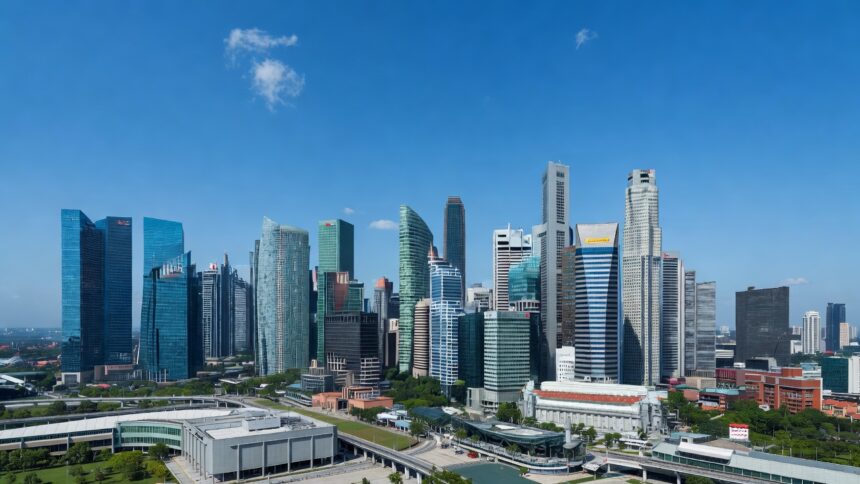
Singapore ranks first on the IMF’s AI Preparedness Index, supported by advanced digital infrastructure, education programmes and forward-looking regulations. East Asian economies are capitalising on their semiconductor manufacturing capabilities while Southeast Asian nations are incorporating AI into existing industrial strengths. The fund has emphasised that deliberate policies are required to extend AI advantages to broader segments of the global population.
IMF officials continue to examine the technology’s implications for productivity, labour markets, financial systems and energy demand. Complementary investments in workforce skills and governance frameworks will prove essential to capturing AI’s full economic potential. The organisation maintains active dialogue with member states on managing the macroeconomic transitions driven by rapid AI adoption.