ع
ع



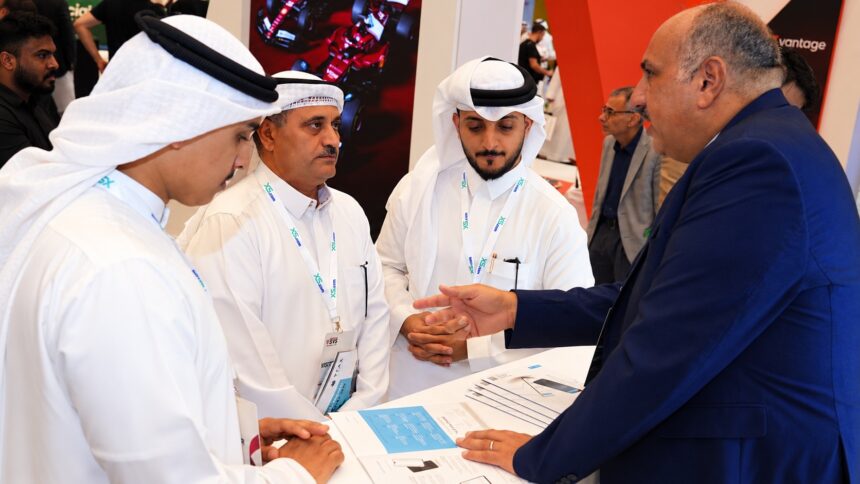


The 14–15 October summit arrives as Kuwait adds new payment infrastructure and international regulators develop oversight tools for AI in finance.
Smart Vision Summit will take place in Kuwait on 14 and 15 October, bringing artificial intelligence, investment technology and financial decision-making into the same discussion. The event is scheduled at Crowne Plaza Kuwait Al Thuraya City, with the organiser listing opening hours of 10am to 6pm on both days.
The published event outline focuses on how AI, data and other technologies are changing investment models and trading environments. Its timing gives that discussion a local backdrop: Kuwait has just added a national wage-payment platform to a wider programme of financial infrastructure development.
Investment tools and payment systems perform different functions, but both depend on the handling of financial data. The developments raise a shared question for the sector: how does a new digital capability become a service that can be operated, supervised and used reliably? That question reaches beyond the appearance of a trading platform or banking application.
A new platform for wage payments
On 28 September, the Central Bank of Kuwait announced the launch of the Kuwait Wage Payment System. The platform is designed to process and monitor private-sector wage transfers through local banks, placing an everyday financial transaction within a coordinated national system.
CBK is responsible for technical and operational management, while the Public Authority for Manpower oversees employer compliance. The bank said the platform uses the ISO 20022 financial messaging standard and is intended to improve data quality, reduce manual procedures and support information-sharing between the relevant authorities.
It is the third system launched under the second phase of Kuwait’s national payments project. CBK identified the Kuwait Automated Clearing House, launched in January 2026, and the Kuwait Dispute Management System, launched in February, as the preceding additions.
These are infrastructure changes with defined operational responsibilities. Their relevance to the wider digital-finance discussion lies in the underlying arrangements for moving money, recording transactions and coordinating institutions, even where the customer encounters only the final transfer.
Data-sharing moves into the banking discussion
Another strand of Kuwait’s financial technology work concerns how account information can be shared. In June 2025, CBK issued a draft open-banking regulatory framework proposing security, technical and operating standards for the activity.
The announcement described a model in which local banks could share customer data securely with licensed open-banking service providers, subject to explicit customer approval. Proposed uses included presenting information from different bank accounts together, tracking expenditure and initiating payments.
That proposal illustrates a different aspect of financial innovation from market analysis. The central issue is permission to use data and the arrangements governing its movement between institutions. A tool that presents information to a customer relies on those arrangements before the quality of its interface becomes relevant.
CBK’s announcement envisaged phased implementation after a final framework and sufficient testing. The June 2025 document therefore establishes the project’s proposed direction; it should not be read as confirmation that every service described in it is already available.
From a demonstration to a tested service
The central bank’s Wolooj innovation framework sets out a route for testing financial technology in a supervised environment. Its stages cover initial applications, assessment, guidance, a pilot and graduation. The process includes a live product demonstration, but continues into technical and operational testing.
During the pilot, the framework calls for checks on compliance, security, customer confidentiality and operational efficiency. Participants report on test results and feedback. A subsequent soft launch involves volunteer customers and defined safeguards, followed by an assessment of whether the product can move forward.
This sequence distinguishes the ability to demonstrate a service from evidence about how it operates with users. It also gives banks, technology firms and regulators different roles in examining a proposed product. The framework addresses the transition from an idea to a controlled trial with measurable requirements.
For electronic payments, CBK’s regulatory overview describes instructions updated in May 2023 and five licence types linked to the nature and volume of the service. It identifies governance, cybersecurity, business continuity and customer rights among the areas covered.
The significance is the range of work behind a financial service. Product design sits alongside operational arrangements and responsibility for customers. Those requirements provide a concrete local setting for broader discussions about applying new technology to financial activity.
AI becomes a subject of financial supervision
The international discussion has also moved into practical oversight. The Central Bank of Ireland recorded the May 2026 publication of IOSCO’s Supervisory Toolkit for AI Use in Capital Markets, together with a standalone toolkit.
Its notice described a further review of industry practices involving governance, disclosure, recordkeeping and reporting. These are questions about how organisations account for their use of AI. They sit alongside the investment sector’s interest in what the technology can do with information.
For the Kuwait summit, that creates a wider context for its stated investment-and-technology focus. The discussion is taking place while both national financial infrastructure and international supervisory work are developing. The organiser’s public outline sets the subject areas; it does not establish participation by the central bank or IOSCO.
The next scheduled event is the two-day gathering on 14–15 October. Its investment agenda will arrive in a market where payment modernisation, controlled fintech testing and proposed data-sharing arrangements already provide specific developments against which the broader technology discussion can be understood.