ع




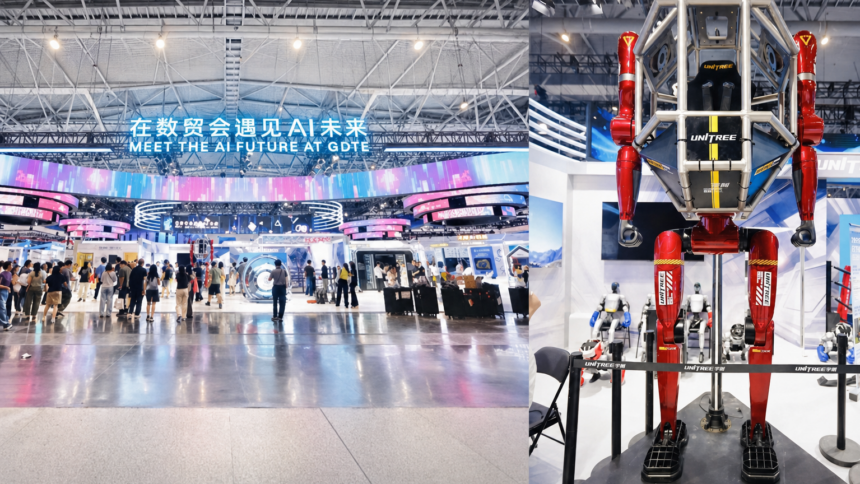


The event organizers reported that the expo which ran from September 23 to 27 expanded its exhibition space to 170,000 square meters and drew 2,008 offline exhibitors of which 402 were international companies representing more than 20 percent of the total. More than 51,000 professional buyers attended the gathering marking a 20 percent rise from the previous edition while cumulative visitor numbers reached 428,000 an increase of 67 percent. The Fifth Global Digital Trade Expo concludes in Hangzhou with broadened global reach that included dedicated participation from Malaysia and Hungary as guest countries alongside delegations from France South Korea and several Central Asian nations the committee stated.
A total of 996 artificial intelligence enterprises took part nearly three times the count from the prior year and presented more than 100 AI application scenarios across various sectors according to the organizing committee. The gathering unveiled the Global Digital Trade Development Report 2026 together with more than 100 industry reports lists initiatives and consensus documents while also inaugurating the Arab Digital Economy Alliance China headquarters. Such outcomes align with preceding editions that according to government figures from 2025 generated investment and trade intentions worth 161.98 billion yuan or roughly 22.79 billion U.S. dollars.
Trade facilitation efforts encompassed more than 50 specialized matching sessions that helped source international procurement orders valued at 1.085 billion U.S. dollars a 47 percent year-on-year gain with AI-related deals accounting for 53 percent of the total event data showed. Seven cooperation agreements worth 255 million U.S. dollars were inked during the China-Arab AI International Cooperation dialogue and the inaugural China-Arab Digital Dialogue that convened over 200 attendees from multiple countries. A dedicated BRICS special economic zones discussion further emphasized practical collaboration mechanisms the organizers reported.
The expo incorporated supporting activities such as the inaugural digital trade train that transported about 1,200 professional buyers from Yiwu to the venue on opening day and multiple competitions focused on artificial intelligence embodied intelligence and brain-computer interfaces that engaged more than 10,000 competing teams. These initiatives complement broader trends detailed in the released reports which build upon 2024 global digital trade export figures that reached 7.23 trillion U.S. dollars as referenced in prior United Nations-linked publications. International buyer attendance from developed markets in Europe the United States Japan and South Korea rose 30 percent compared with the last expo according to the committee.
Organizers highlighted how the platform advanced digital connectivity and helped narrow the digital divide by promoting Chinese meteorological early-warning solutions and other public goods to benefit developing nations. The event also coordinated with online platforms and offline linkages to amplify business matching for small and medium-sized enterprises that secured potential clients from markets including Russia and Ethiopia during the proceedings. Follow-up efforts will focus on converting these outcomes into sustained partnerships across the digital trade ecosystem the organizing committee noted.