ع
ع



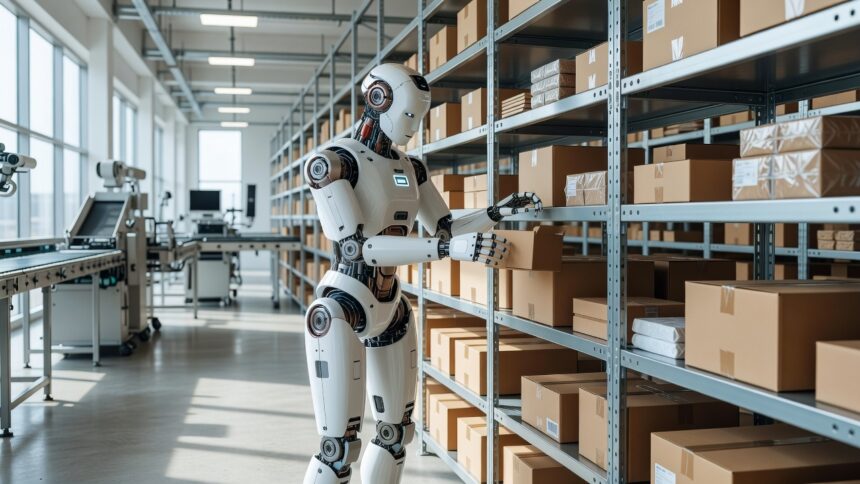


In an interview with Reuters on the sidelines of the 2026 World Robot Conference in Beijing ACE Robotics chairman Wang Xiaogang forecast that humanoid robot brains will reach a breakthrough comparable to the launch of ChatGPT by the end of 2027. Wang who also co-founded the AI firm SenseTime attributed the anticipated progress to advances in world models coupled with better environmental data capture. He cautioned that even after this inflection point broad commercial implementation of embodied world models across sectors would probably take another four to five years.
Embodied AI models which control robot intelligence and autonomy in physical spaces differ markedly from the large language models now common in workplaces and homes. Systems enabling robots to handle varied tasks in unfamiliar environments remain elusive despite the rapid uptake of tools such as ChatGPT and DeepSeek. Investors evaluating China’s expanding humanoid robot companies now place greater weight on genuine commercial deployments than on demonstrations like dancing or athletic feats according to the chairman’s remarks to Reuters.
ACE Robotics which launched in July 2025 with support from Ant Group and SenseTime obtained more than $100 million in funding through several rounds in the first half of 2026. Wang indicated the company aims to pursue an initial public offering at the earliest opportunity permitted under regulations that normally require three completed fiscal years of operations. Its open-source Kairos-4B model ranks first on public benchmarks outperforming larger systems including Nvidia’s Cosmos 3 and Ant Group’s Lingbot despite using only 4 billion parameters.
The Kairos model merges perception multi-modal understanding physical simulation and action planning allowing it to produce extended video and action predictions across multi-minute sequences. Wang told Reuters that the entire industry has so far gathered only about 100000 hours of training data a volume far below what is needed for effective embodied foundation models. ACE is accelerating collection by fitting production-line workers with lightweight sensors achieving high efficiency that should yield tens of millions of hours within two years.
The startup is already deploying its embodied AI models in commercial settings such as unmanned retail stores hotel services and instant-delivery warehouses that use humanoid robots from makers including Unitree AgiBot and Fourier. Wang outlined plans to roll out the technology in at least 1000 stores over the coming year before scaling to 10000 stores within two years. For computing requirements the company draws on Nvidia chips as well as those from Chinese suppliers Rhino Tech and Digua Robotics to diversify its supply chain and drive down hardware costs.
Unitree founder Wang Xingxing offered a similar outlook during the conference predicting a possible dramatic advance in robot brains within two to three years at the earliest. The comments from both executives highlight ongoing efforts to overcome data bottlenecks while moving beyond laboratory demonstrations toward practical economic value. ACE Robotics continues to test its systems in real production environments as competition intensifies across China’s robotics sector.