ع
ع



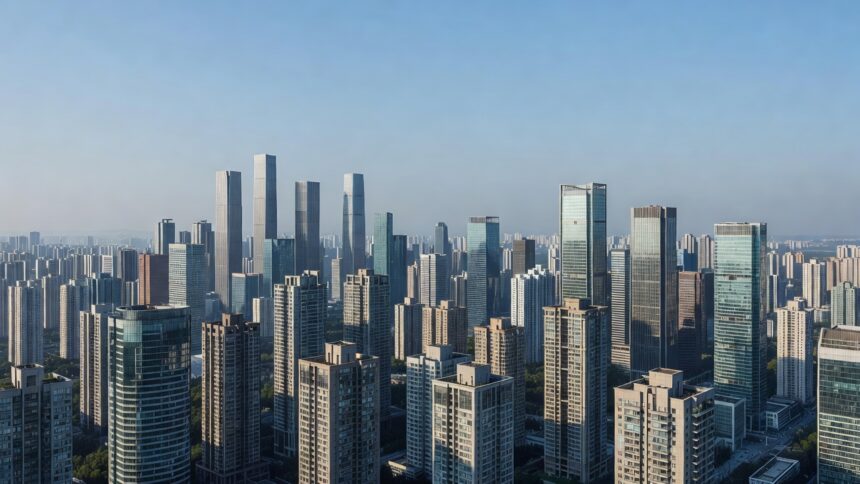


The Shenzhen Intermediate People’s Court handed down the life sentence to Hui Ka Yan, also known as Xu Jiayin, on Thursday while ordering the confiscation of all his personal assets and imposing fines totaling roughly $2.3 billion on Evergrande and affiliated companies. Hui, once China’s richest man, pleaded guilty in April to eight charges including fundraising fraud, bribery, misuse of funds and illegally issuing securities, according to the court statement. The ruling described the offenses as involving particularly large sums that caused severe economic losses and social harm, warranting the maximum penalties under Chinese law. Evergrande, which defaulted in 2021 with liabilities exceeding $300 billion, saw its flagship units also hit with substantial penalties as part of the judgment.
Hui built Evergrande into the world’s most indebted property developer through aggressive borrowing that fueled rapid expansion until regulatory tightening exposed the vulnerabilities, Reuters reported. The company’s collapse sent shock waves through China’s financial system and triggered a broader real estate crisis that has persisted for years. A New York Times assessment found the punishment caps the downfall of an empire that highlighted the economy’s extraordinary dependence on real estate for growth. The court noted that Hui abused his position to orchestrate financial fraud and misappropriate assets.
China’s real estate sector and related infrastructure have historically accounted for nearly one-third of economic demand, a Brookings Institution analysis determined. Goldman Sachs estimated that the property downturn reduced annual real GDP growth by about 2 percentage points in 2024 and 2025, with the drag expected to ease only gradually. National Bureau of Statistics data showed new housing sales declined 14.1 percent year on year in 2024 to 814.5 million square meters, reflecting weakened demand and investment. The crisis has also contributed to falling industrial output in materials such as steel and cement.
Bloomberg Economics estimates placed the sector’s contribution to GDP at about 19 percent in 2024, down from a peak of 24 percent in 2018, as house prices dropped around 30 percent between 2021 and 2026. A Council on Foreign Relations review noted that the property market’s contraction has eroded household wealth, with roughly 70 percent of Chinese families holding apartments as their primary asset. This dynamic has dampened consumer spending and complicated efforts to shift the economy toward higher-value manufacturing and technology sectors.
The sentencing arrives as Chinese authorities maintain pressure on the sector through tighter regulations and audits aimed at preventing future irregularities, according to multiple official statements. While the move signals strict enforcement against corporate misconduct, recovery in property investment remains slow with construction activity still contracting. Trading Economics figures drawn from the National Bureau of Statistics placed GDP growth contribution from real estate at negative 0.2 percent in the second quarter of 2026. Officials continue to roll out targeted support measures including eased financing for select developers.
Economists project China’s overall GDP growth to moderate to 4.6 percent in 2026, with the property sector’s lingering effects cited as a key restraint in assessments from bodies such as the International Monetary Fund. The Evergrande case has become a reference point for the risks embedded in the pre-2021 growth model that relied heavily on debt-fueled construction and land sales to local governments. Further restructuring proceedings for the developer, now in liquidation, are expected to extend into coming quarters as courts address remaining creditor claims.