ع
ع



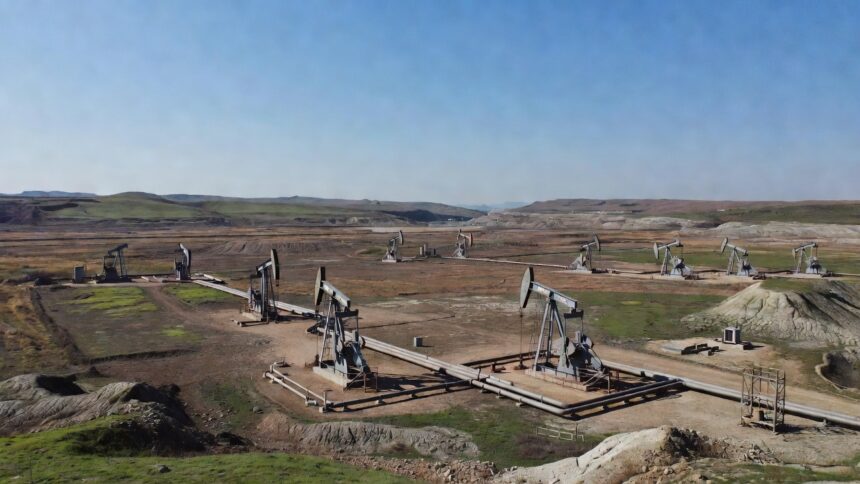


The National Energy Administration detailed the launch of China’s inaugural national shale oil demonstration zone located in a continental faulted lake basin within the Shengli Jiyang oilfield of Shandong Province. This zone delivered more than 700,000 tonnes of output throughout 2025, according to the administration’s newly published assessment. The report further placed proven geological reserves at 327 million tonnes for the site, underscoring its strategic importance in the country’s unconventional energy portfolio.
This project stands as the third national-level shale oil demonstration zone, after comparable developments in the Xinjiang Uygur Autonomous Region and Heilongjiang Province. The administration’s report outlined its purpose as advancing the technological framework for shale oil exploration and extraction in faulted lake basin environments. Officials seek to resolve longstanding technical hurdles, secure significant production gains and formulate models suitable for replication in other parts of the nation that share similar geology.
Shale oil consists of liquid hydrocarbons trapped inside shale rock layers that can be brought to the surface for refining into fuels and other products. The National Energy Administration noted that these resources occur widely and hold reserves substantially larger than those of traditional oil fields. Such characteristics make shale oil a vital component in efforts to enhance domestic energy supplies and reduce reliance on imports.
National shale oil production climbed above 8.5 million tonnes in 2025, representing more than ten times the amount achieved in 2018, the administration’s data showed. This expansion contributed to an overall record in China’s oil and gas sector, where total output measured in oil equivalent reached 420 million tonnes for the year. Crude oil production specifically attained 216 million tonnes, while natural gas volumes posted another year of solid growth.
The demonstration zone’s success follows dedicated work by operators at the Shengli oilfield to test and refine extraction methods suited to the local formations. Earlier evaluations had pointed to significant resource potential in the area, with the latest figures reflecting updated assessments of recoverable volumes. The National Energy Administration expects the accumulated experience to inform future projects aimed at scaling up unconventional output across China.
Development of the Jiyang zone aligns with a new round of strategic actions for oil and gas exploration announced alongside the report for implementation starting in 2026. The administration indicated that maintaining crude oil output above 200 million tonnes annually remains a core target. Continued focus on shale resources will play an integral role in meeting those goals while addressing evolving energy needs.