ع
ع






Prime Minister Narendra Modi told delegates at SEMICON India 2026 that the world needs new and trusted locations for semiconductor manufacturing amid geopolitical tensions that have strained global supply chains. He assured industry leaders gathered in New Delhi on September 17 that India is preparing itself to meet that demand through policy reforms, infrastructure development and parallel growth across the full technology stack. Modi highlighted recent economic markers including 7.8 per cent quarterly GDP growth and a credit rating upgrade by a Japanese agency as signs of the country’s readiness, according to his address at the event. The prime minister also referenced the New Delhi Declaration from the BRICS summit to illustrate India’s growing global role.
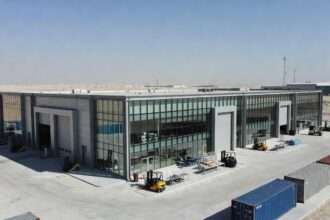
The three-day conference running through September 19 has drawn executives from more than 600 companies across 52 countries including ASML, Applied Materials, Lam Research, Tokyo Electron and IBM Research along with Indian firms such as Tata Electronics and Micron, a government release showed. Modi used the occasion to announce the commencement of commercial production at two additional facilities in Mohali and Surat, increasing the number of operational semiconductor units in the country to five. The India Semiconductor Mission 2.0 carries an expanded outlay of 1.27 lakh crore rupees, or about 13.5 billion dollars, to support a broader ecosystem covering equipment, materials, design, research and specialised talent development.
Twelve semiconductor projects spanning fabrication, assembly and testing have received approval so far with further approvals expected as the programme advances, Modi stated during the inauguration at Yashobhoomi. The prime minister noted that India has built capabilities in design, manufacturing, equipment, materials and testing concurrently rather than in sequence, achieving in roughly four years what typically requires a decade or more. He urged equipment and component manufacturers attending the conference to capitalise on the opportunities created by these developments.
Modi described the semiconductor sector as a never-ending journey that forms the foundation for a wider high-technology industry in India. “The world needs new and trusted locations for chip manufacturing and India is preparing itself for this,” he said in his address. The comments reflect efforts to position the country as an alternative manufacturing base at a time when artificial intelligence, data centres and other advanced applications are driving unprecedented demand for chips.
A roundtable with semiconductor chief executives held the day before the conference provided direct industry feedback on requirements for success in the Indian market, officials said. The initiative builds on an earlier target to develop 85,000 specialised engineers that was achieved ahead of schedule and now aims to train an additional 100,000 professionals in semiconductor design and related fields. India produces hundreds of thousands of engineers each year, creating a substantial talent reservoir for the sector, Modi noted.
The push forms part of a global trend toward supply-chain diversification with India offering financial incentives, regulatory streamlining and infrastructure support to attract long-term investment. Companies already engaged in the market are helping establish the initial production base while the government works to expand into more advanced segments of the value chain. SEMICON India 2026 is the first edition of the event since the formal launch of the India Semiconductor Mission 2.0 earlier this year.