ع
ع



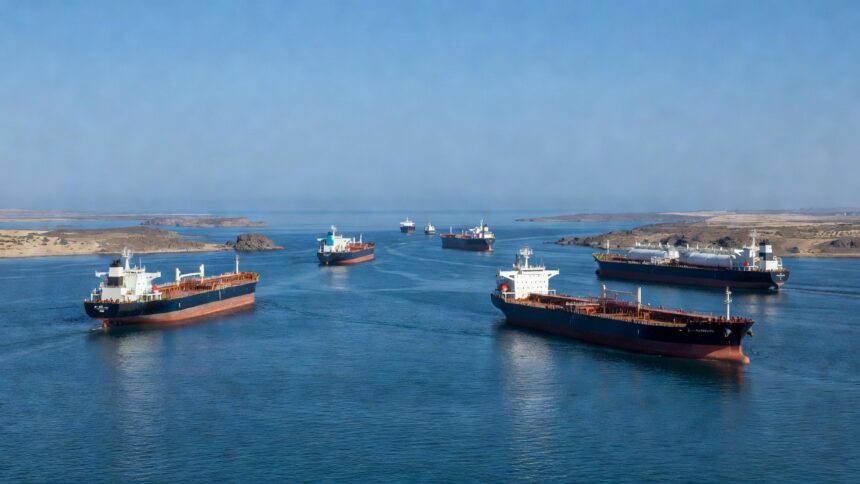


Reuters reported that eight vessels transited the Strait of Hormuz on Tuesday, including five tankers and three bulk carriers, according to shipping data from Kpler. This figure matched the previous day’s count with six of the vessels entering the waterway while a gas carrier and a tanker were exiting. The numbers reflect a continuation of subdued activity at one of the world’s most critical energy arteries.
In the Bab el-Mandeb strait 20 vessels crossed the waterway with 10 entering and 10 exiting, Kpler data showed. The traffic included six tankers, three dry bulk carriers and a gas carrier moving inward along with seven tankers and three bulk carriers heading outward. These counts also remained unchanged from the prior day amid the regional tensions.
The steady but sharply reduced traffic comes after the US-Israeli war with Iran erupted on February 28, according to a series of Reuters updates throughout 2026. Pre-war volumes through the Strait of Hormuz typically ranged between 130 and 140 ships daily, earlier Kpler assessments found. Daily transits have frequently fallen to single digits or low teens in recent months as operators adjusted to heightened risks and alternative routing.
A liquefied natural gas tanker controlled by Abu Dhabi National Oil Co reappeared outside the Strait of Hormuz on Tuesday after loading cargo at Das Island in mid-July, LSEG and Kpler data indicated. The vessel Mubaraz departed on July 14 and was tracked inside the strait until July 16 before proceeding toward India’s Dahej terminal with an arrival date of August 5. This represents the third such outbound transit for the tanker since the conflict began with prior cargoes delivered to China and India, the tracking records showed.
ADNOC said in response to a request for comment that the company does not comment on the position, movements or routing of its vessels as a matter of policy. The continuation of select LNG voyages nevertheless underscores limited commercial persistence through the chokepoint even as overall volumes have contracted. A Kpler analysis documented an approximate 70 percent decline in crossings once temporary truce periods gave way to renewed conflict phases.
Some vessels continue to sail with transponders switched off and are therefore excluded from the counts compiled by ship-tracking providers such as Kpler. This pattern has featured in multiple Reuters reports from the spring and summer of 2026 as operators navigated safety concerns. The practice adds further uncertainty to assessments of true traffic levels across the key waterways.
Earlier Reuters dispatches from April and July recorded comparable low transit figures with some days showing as few as three vessels through Hormuz. Kpler data placed average daily crossings around 13 during active conflict intervals compared with 45 while truces held. The current plateau at reduced volumes illustrates the cautious stance prevailing among shippers while peace negotiations remain unresolved.